Finding the perfect notebook can feel like a maze. You look online and suddenly stare at a long list of strange letters and numbers. A5, B6, Pocket, Executive—what do these terms actually mean? Choosing the wrong size can quickly ruin your writing routine. The right dimensions make your daily tasks smooth and efficient.
The truth is, there is no single “best” notebook size. The perfect fit depends entirely on your lifestyle and how you plan to use it. Different regions also have their own habits. For example, US Letter size dominates North America, while the A-series rules the rest of the world.
In this quick notebook size guide, we will clear up the confusion. We will break down standard dimensions in both millimeters and inches, explain their practical uses, and help you pick the exact notebook that fits your workspace and writing habits.

Understanding the A-Series: The Global Standard
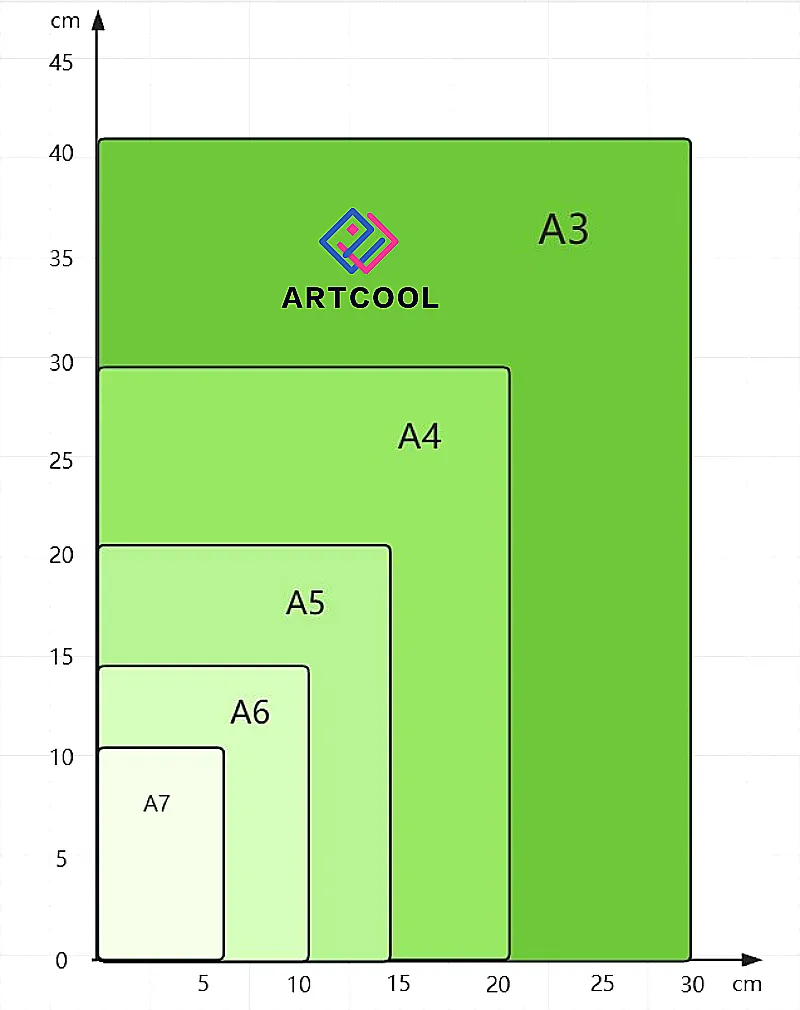
If your brand operates globally or sources products from overseas, the ISO 216 A-series is the standard you will see most. The system follows a simple rule: the smaller the number, the bigger the paper. Folding an A4 sheet exactly in half creates an A5 sheet. Folding A5 in half creates A6, and so on.
1. A3 Notebooks
Size: 297 x 420 mm | 11.7 x 16.5 inches
A3 is a massive format, exactly equal to two A4 sheets placed side by side. It is too large for casual writing or daily carry. Instead, it serves as a giant, flat canvas that stays on a studio desk or artist’s easel.
2. A4 Notebooks
Size: 210 x 297 mm | 8.3 x 11.7 inches
A4 matches standard office printer paper. It offers the maximum possible grid space for intense writing, but it is heavy and cumbersome to move around.
3. A5 Notebooks
Size: 148 x 210 mm | 5.8 x 8.3 inches
A5 is roughly the size of an iPad Mini. It is the undisputed king of the stationery world because it strikes a flawless balance between writing area and portability.
4. A6 Notebooks
Size: 105 x 148 mm | 4.1 x 5.8 inches
A6 is the exact size of a standard passport or a small paperback book. It is small, lightweight, and highly portable. It is far less intimidating than a large blank page, making it excellent for quick, daily micro-journaling.
5. A7 Notebooks
Size: 74 x 105 mm | 2.9 x 4.1 inches
A7 is tiny—roughly the size of a smartphone or a deck of playing cards. It is designed purely for rapid, one-handed note-taking on the go.
Entering the B-Series: The Perfect Alternatives
While the A-series dominates western corporate offices, the ISO 216 B-series is the secret weapon for stationery lovers and experienced procurement managers. A B-series size sits perfectly right between two A-series sizes. For example, B5 is exactly halfway between A4 and A5. This geometric middle ground provides a slightly “roomier” writing experience without adding too much heavy bulk.
1. B3 Notebooks
Size: 353 x 500 mm | 13.9 x 19.7 inches
B3 is an expansive, poster-style format. It is a niche size used primarily in professional creative industries. It offers maximum space for wide-angle visual thinking and large illustrations.
2. B4 Notebooks
Size: 250 x 353 mm | 9.8 x 13.9 inches
B4 is a large desktop ledger size that is significantly wider and taller than standard A4 paper. It provides an excellent horizontal grid for visual layouts and heavy data logging without losing edge details.
3. B5 Notebooks
Size: 176 x 250 mm | 6.9 x 9.8 inches
B5 is smaller than a textbook but larger than an A5 planner. It is an absolute hit in schools and universities across Asia and Europe because it maximizes continuous writing space while remaining reasonably portable.
4. B6 Notebooks
Size: 125 x 176 mm | 4.9 x 6.9 inches
Sitting comfortably between A5 and A6, B6 is praised by designers for its “golden ratio” aesthetics. It provides a cozy, inviting canvas that is compact enough to hold in one hand but wide enough for comfortable paragraphs.
5. B7 Notebooks
Size: 88 x 125 mm | 3.5 x 4.9 inches
These are ultra-portable micro formats designed for speed and convenience. B7 is almost identical to an official international passport.

Other Popular Notebook Sizes
While international ISO standards dominate Europe and Asia, global brands and procurement managers must navigate other major sizing systems. These non-ISO sizes are deeply rooted in local corporate culture and luxury retail. Here is how they break down.
1. US Letter Notebooks
Size: 216×279 mm | 8.5×11 inches
This is the absolute king of North American schools, law firms, and corporate offices. It is slightly wider but shorter than an international A4 sheet. It feels familiar, formal, and authoritative, built to stay flat on a desk.
2. Composition Notebooks
Size: 190×247 mm | 7.5×9.75 inches
This is a deeply rooted cultural icon in North America, instantly recognized by its traditional black-and-white marble cover. Size-wise, it sits perfectly between a standard US Letter size and an A5 journal.
3. Traveler’s & Slim Notebooks
Size: 110×210 mm | 4.3×8.3 inches
Popularized by creative communities, this unique format has the exact height of an A5 notebook but features a distinct, narrow slim profile. It is perfectly scaled to hold folded boarding passes, maps, and travel tickets without letting them spill out.
4. US Junior Legal & Half Letter Pads
Size: 127 × 203 mm | 5 × 8 inches / 140 × 216 mm | 5.5 × 8.5 inches
These are highly popular personal sizes in North America, acting as compact companions to standard office paper. Half Letter is essentially a folded version of Letter size, while Junior Legal offers a slim layout that is highly accessible.
5. Pocket Notebooks
Size: 70 × 100 mm to 90 × 140 mm
Popularized by luxury retail giants like Moleskine, these dimensions do not follow strict ISO or US rules. However, they have become the global benchmark for high-end consumer stationery. The Medium size is slightly slimmer than A5, giving it an elegant, elongated feel.
How This Tool Works
This tool visualizes notebook sizes using a real-scale conversion based on millimeter dimensions. Each format is rendered proportionally so you can understand the actual physical difference between sizes before making a selection.
The iPhone 15 Pro Max is used as a fixed reference object to provide a consistent real-world comparison baseline across all notebook formats.
How to use
- Select a notebook size from the left panel
- View the real-scale comparison in the visualization area
- Compare proportions against the iPhone reference
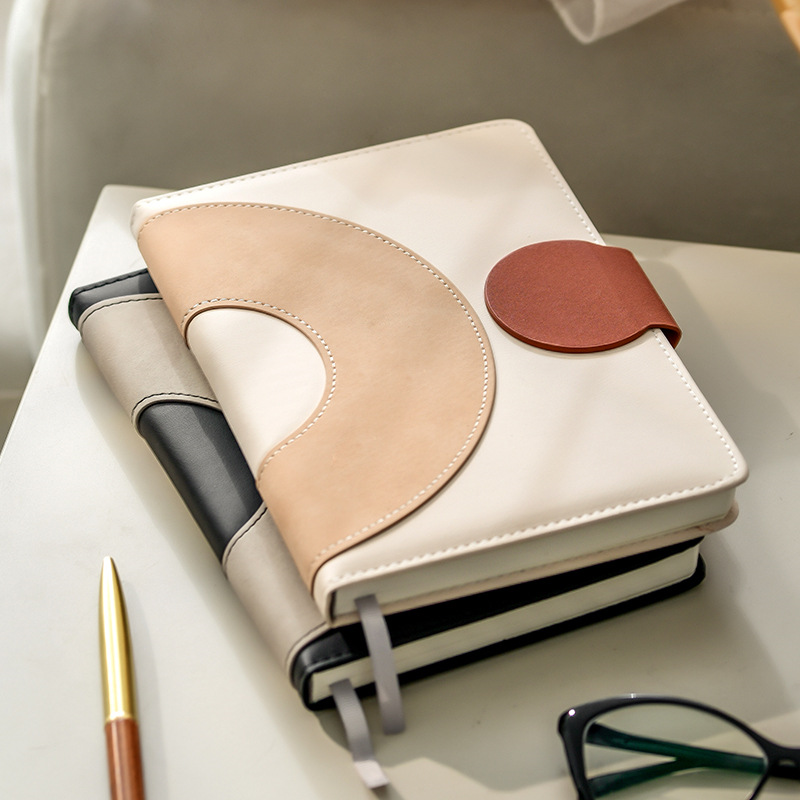
Notebook Size Guide: Finding Your Perfect Sizing Strategy
1. Match Your Daily Workspace & Mobility
Think about where you do most of your writing and how often you travel:
- The Desk-Bound Writer: If your notebook rarely leaves your study or home office, prioritize canvas size. Go for A4, B5, or US Letter. These dimensions give you wide-open spaces to track complex projects, keep detailed school study notes, or sketch large diagrams next to your laptop.
- The Commuter & Nomad: If you love working from coffee shops, trains, or different meeting rooms, portability is key. Choose A5 or B6. They strike the perfect middle ground, offering plenty of writing space while sliding effortlessly into a backpack or tote bag.
- The On-the-Go Creator: If you need to capture sudden ideas while walking, traveling, or standing in line, pick A6, B7, or Pocket Size. These are feather-light and can live permanently in your coat pocket or purse for instant access.
2. Match Your Handwriting & Layout Style
Your natural writing scale and tools play a massive role in how a page feels:
- Large, Expressive, & Visual: If you have big handwriting, use thick gel pens, or love creating detailed Bullet Journal layouts with stickers and charts, stay away from pocket notebooks. Stick to B5 or A5 to give your text the proper breathing room.
- Compact, Neat, & Text-Heavy: If you use fine-liner pens, keep simple checkbox to-do lists, or have tiny handwriting, a large A5 page might feel like too much blank white space to fill every day. You will likely love the cozy, fast-paced feel of a B6 or A6 diary.
3. Match Your Creative Content & Activities
Different creative habits naturally call for different shapes and proportions:
- For Long-Form Writing & Journaling: A5 and B6 are the undisputed fan favorites. They feel traditional and cozy, like a real book, making your evening journaling routine feel like a special ritual.
- For Visual Design & Art: If you draw, paint, or practice calligraphy, look into A3, B4, or Square notebook sizes. They break away from standard textbook shapes, giving your sketches a premium, professional look.
- For Travel Logs & Scrapbooking: Choose Traveler’s / Slim sizes. Their tall, narrow shape is perfectly scaled to hold folded boarding passes, movie tickets, and maps without letting them spill out the edges while you explore.
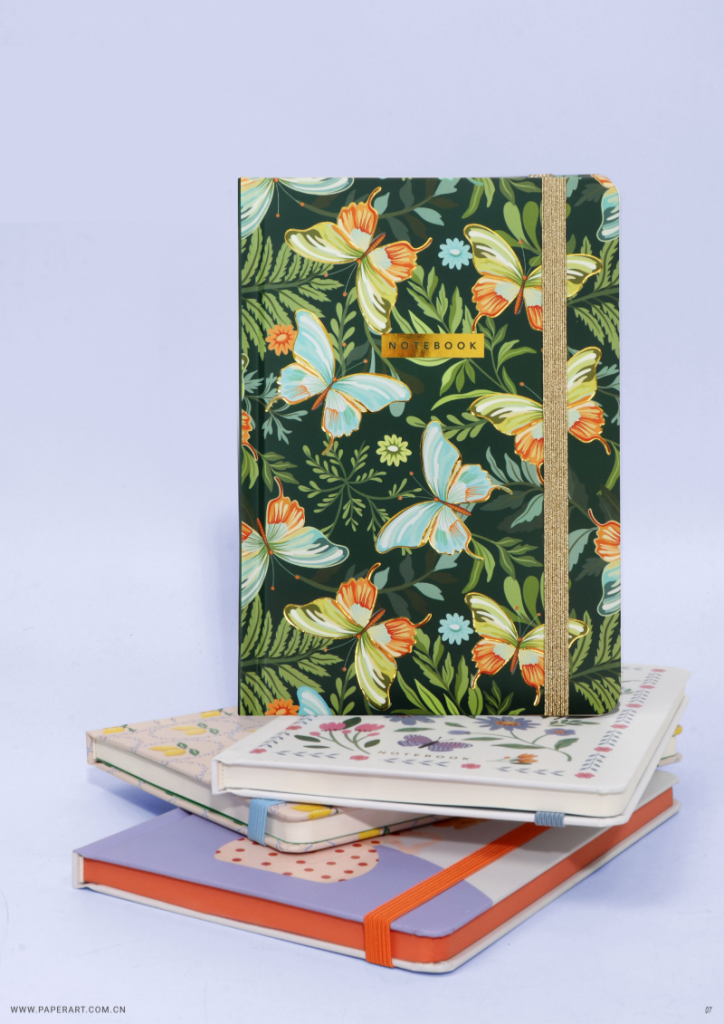
Source: Artcool S26 Journal & Notebook
Conclusion
In the world of stationery, there is no single “correct” notebook size on paper. Choosing the perfect dimensions is not about finding a universal standard. It is about matching a notebook to your personal writing habits.
A notebook size directly affects how you write, think, and organize. When comparing sizes, small numerical specs can be confusing. That is why comparing them to a real-world object makes it much easier to visualize the actual physical scale.