Stationery gift sets bring together practical products, coordinated designs, and gift-ready packaging. For brands and retailers, they offer opportunities to create products for corporate gifting, seasonal promotions, back-to-school sales, and everyday retail.
However, a successful stationery gift set takes more than putting a notebook, a few pens, and a box together. Buyers need to consider the target audience, product combination, customization options, packaging, and budget. Each decision affects the set’s appeal and market position.
A well-planned stationery gift set should have a clear purpose and a consistent design. It should also offer value beyond the individual items. In this guide, we cover how to develop custom stationery gift sets for your brand or retail business.

Source: Artcool Little Garden Series
Market Positioning for Custom Stationery Gift Sets
Stationery gift sets serve different markets, from corporate gifting to retail collections. Their value comes from more than the products inside. A coordinated design, useful product combination, and suitable packaging can make a set more appealing than individual items.
1. Who Buys Stationery Gift Sets?
Corporate buyers purchase sets for employee welcome kits, client gifts, company events, and holiday rewards. They focus on budget, brand presentation, product quality, and reliable delivery.
Retailers sell stationery gift sets for birthdays, holidays, back-to-school shopping, and everyday gifting. They look for attractive designs, gift-ready packaging, and a clear reason for customers to choose a set over individual products.
Brands and promotional buyers use custom stationery gift sets for marketing campaigns, loyalty programs, trade shows, and branded merchandise. Their priorities include consistent branding, cost control, and customization options.
2. From Seasonal Gifts to Year-Round Collections
Stationery gift sets are not limited to holidays. Corporate onboarding, client appreciation, creative hobbies, and everyday planning create opportunities throughout the year. Seasonal collections can still play an important role. Christmas, back-to-school, and New Year campaigns offer clear themes for product design and promotion.
3. Three Positioning Strategies for Stationery Gift Sets
(1) Value-Focused Sets
These sets prioritize affordability and practical use. They suit large corporate orders, promotional campaigns, and event giveaways.
Typical contents include a basic notebook, a pen, sticky notes, and simple paper packaging. Logo printing provides a straightforward way to add branding while keeping customization costs under control.
(2) Quality-Focused Sets
These sets combine useful products with upgraded materials and coordinated packaging. They work well for client gifts, employee rewards, and mid-range retail collections.
Possible features include hardcover notebooks, metal pens, refined cover finishes, and custom gift boxes. The goal is to create a more polished experience without adding unnecessary items.
(3) Design-Led Sets
These sets focus on distinctive artwork, themed collections, or exclusive designs. They suit lifestyle retailers, special editions, and brand collaborations.
Custom illustrations, coordinated accessories, and reusable gift boxes can help establish a recognizable identity. The design should give customers a clear reason to choose the set.

Popular Product Combinations for Customized Gift Sets
2.1 Choose a Core Product
The core product is the main item in the stationery gift set. It often shapes the set’s perceived value, design, and target market.
Notebooks and Journals
Notebooks are versatile and suit corporate gifts, retail collections, and everyday use. They also offer plenty of customization options.
- Size: A5 suits most gift sets. A6 works well for compact sets, while B5 offers more writing space.
- Paper layout: Lined pages suit everyday writing. Grid and dot-grid pages appeal to planners and creative users.
- Cover material: Printed paper covers help control costs. PU and fabric covers offer different looks and finishes.
Pens and Writing Instruments
Pens complement notebooks and can also serve as the main product in a stationery gift set. Plastic pens suit budget-friendly orders, while metal pens offer a more refined look. Fountain pens are suitable for premium collections.
Customization options include pen color, logo printing or engraving, and matching pen boxes. Choose a writing instrument that matches the set’s quality level and intended use.
Planners and Functional Notebooks
Planners suit office workers, students, and people who manage daily tasks. Undated planners offer more flexibility for retail and corporate orders because they can be used at any time of year.
Other options include travel journals, reading journals, and sketchbooks. These products work well for sets designed around specific hobbies or activities.
2.2 Add Complementary Products
Supporting items make a stationery gift set more useful and visually complete. Choose products that work with the core item rather than adding accessories just to increase the item count.
| Product type | Examples | Best suited for |
|---|---|---|
| Writing and planning | Sticky notes, memo pads, page markers | Office and productivity sets |
| Storage and protection | Pencil cases, bookmarks, notebook bands | Everyday and corporate gifts |
| Creative accessories | Stickers, washi tape, stencils | Journaling and art sets |
| Desk accessories | Pen holders, paper clips, desk organizers | Office gifts and welcome kits |
| Gift details | Greeting cards, postcards, branded notes | Client gifts and seasonal collections |
2.3 Add Optional Extras
A small extra can make a stationery gift set feel more thoughtful. It should support the theme or improve the gifting experience.
- Custom cards: Thank-you notes or brand messages add a personal touch.
- Reusable bags: Canvas or fabric pouches can serve as both packaging and practical accessories.
- Lifestyle products: Tea, coffee, or other small gifts can add a sense of occasion to corporate or seasonal sets.
Non-stationery items may increase sourcing and packaging complexity. Food products also require checks on applicable safety, labeling, and shelf-life requirements. Keep extras simple and relevant to the target audience.

Source: Artcool Gift & Stationery Catalog
How to Customize a Stationery Gift Set
Custom stationery gift sets help brands and retailers create products that match their identity, target audience, and budget. Customization can cover logos, colors, materials, inner pages, accessories, and packaging.
3.1 Logo and Brand Customization
Logo customization is a practical starting point for corporate gifts, promotional merchandise, and retail collections.
Common options include:
- Logo printing on notebook covers and pen barrels
- Foil stamping or embossing on covers and gift boxes
- Custom labels, sleeves, and greeting cards
- Branded sticky notes and other paper accessories
Different techniques create different effects. Foil stamping adds metallic details, while embossing and debossing create raised or recessed designs. Screen printing works well for many colored logos and graphics.
3.2 Customize Colors, Materials, and Finishes
Coordinated colors and materials help create a consistent look across the set. Brands can use their signature colors on notebook covers, pens, bookmarks, and packaging.
Material choices also affect the product’s appearance, feel, and cost.
- Notebook covers: Printed paper, PU, and fabric offer different looks and price points.
- Writing instruments: Plastic pens suit budget-friendly sets, while metal pens offer a more refined finish.
- Cover finishes: Foil stamping, embossing, debossing, and spot UV can highlight selected design elements.
- Accessories: Elastic bands, pen clips, bookmarks, and pencil cases can match the main products.
Avoid using too many unrelated colors, materials, or finishes. Each element should support the same visual theme.
3.3 Customize Inner Pages and Accessories
Custom inner pages make a stationery gift set more useful for a specific audience. They can also add brand details beyond the cover logo.
Options include:
- Custom page layouts: Meeting notes, weekly planners, habit trackers, or project planning templates.
- Printed endpapers: Brand graphics, illustrations, or company messages inside the notebook cover.
- Custom paper details: Colored ruling, grid layouts, or selected logo elements.
- Matching accessories: Printed sticky notes, washi tape, index tabs, bookmarks, and greeting cards.

Stationery Gift Set Ideas for Different Markets
The best stationery gift set depends on its target audience and purpose. Brands can adjust the product mix, design, and packaging to suit different markets.
1. Corporate Gifts and Employee Welcome Kits
Corporate stationery gift sets should be practical, well-presented, and easy to customize for bulk orders. They are suitable for employee welcome kits, company events, and staff appreciation gifts.
Suggested combination:
- A5 notebook
- Matching pen
- Sticky notes or page markers
- Branded gift box or paper bag
Customization focus: Use company colors and a clear logo. A custom welcome card or branded notebook pages can add a personal touch. Choose reliable, everyday products that recipients will continue to use.

Source: Artcool Ocean World-Back to School
2. Client Appreciation and Executive Gifts
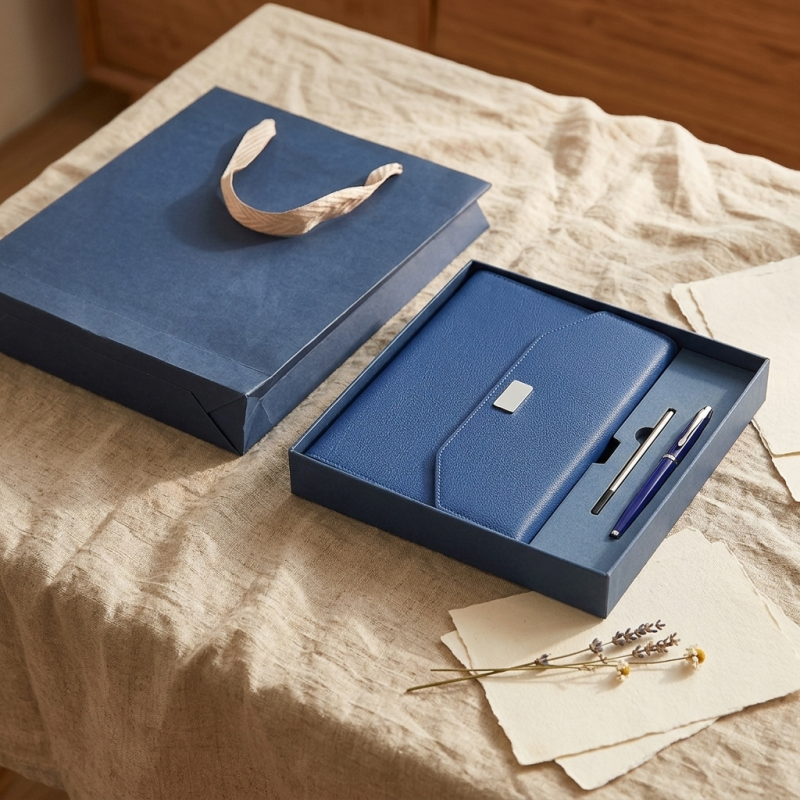
Client gifts should balance product quality, useful features, and presentation. A coordinated set can help businesses express appreciation without adding unnecessary items.
Suggested combination:
- Hardcover notebook with a PU or fabric cover
- Metal pen
- Matching bookmark or business card holder
- Custom gift box and thank-you card
Customization focus: Use refined finishes, coordinated materials, and subtle branding. Focus on the quality of the notebook and pen rather than adding too many accessories.
3. Seasonal Retail and Holiday Collections
Seasonal gift sets allow retailers to introduce themed products for Christmas, Valentine’s Day, New Year, and back-to-school shopping.
Suggested combination:
- Themed notebook or planner
- Decorative pen
- Stickers or washi tape
- Greeting card
- Matching gift box or paper bag
Customization focus: Develop artwork and packaging around a clear seasonal theme. For products with a short selling window, confirm designs and production schedules early. Undated planners and reusable stationery can also remain useful after the season ends.

4. Branded Collections and Design Collaborations
Brand collaborations and exclusive retail collections need a recognizable design. Customers may be drawn to the artwork, theme, or connection between the brands as much as to the stationery itself.
Suggested combination:
- Custom-designed notebook or journal
- Matching pen
- Themed stickers or stationery accessories
- Exclusive card or printed insert
- Coordinated presentation box
Customization focus: Apply the same visual concept across the products and packaging. For licensed collaborations, confirm artwork approval and usage rights before production. Limited-edition details can help distinguish the collection when they offer genuine value to the target audience.

Packaging Ideas for Stationery Gift Sets
Packaging brings the products together and shapes the recipient’s first impression. The right design should protect the contents, present each item neatly, and match the gift set’s price point.
1. Choose the Right Box Structure
Different box structures suit different products and budgets.
- Magnetic closure boxes: Offer a premium look and are suitable for corporate gifts and high-end retail sets.
- Drawer boxes: Create a layered opening experience and work well for premium stationery collections.
- Lid-and-base boxes: Provide a classic, sturdy design for notebooks, pens, and seasonal gift sets.
- Folding cartons: Offer a practical, cost-effective option for promotional sets and larger orders.
- Custom-shaped boxes: Help exclusive collections stand out but usually require more design and production work.
Choose the structure based on the product dimensions, target price, and presentation needs. A complex box is not always necessary. A simple, well-designed package can work just as well.
2. Design Inserts for Protection and Presentation
An insert keeps products in place and makes the contents easy to see when the box opens.
Common options include:
- Paperboard inserts: Lightweight, customizable, and suitable for many standard stationery gift sets.
- EVA foam inserts: Provide firm support for metal pens, premium notebooks, and delicate accessories.
- Fabric-covered inserts: Add a soft, refined finish to executive and premium gifts.
Arrange the main product where it is easy to see. Place smaller accessories in separate sections to keep the layout organized. Before mass production, test the insert with the actual products to check the fit and prevent movement during shipping.
3. Create a Better Unboxing Experience
A good unboxing experience comes from thoughtful details, not simply more packaging.
Consider three elements:
- First impression: Use coordinated colors, suitable materials, and selected finishes to match the brand.
- Product arrangement: Give the main item visual priority. Keep smaller accessories neatly organized.
- Personal message: Add a thank-you card, brand message, or short product guide where relevant.
For corporate gifts, a personalized message can make the set feel more thoughtful. For retail collections, coordinated artwork and a clear presentation can help the product stand out on shelves or online.
Avoid unnecessary packaging layers. The aim is to make the set feel complete without creating extra waste or cost.
4. Consider Sustainable Packaging
Brands can reduce packaging waste without sacrificing presentation.
- Use responsibly sourced or recycled paperboard where suitable.
- Choose paper inserts when they provide enough protection.
- Reduce unnecessary plastic components and packaging layers.
- Design sturdy gift boxes that recipients can reuse for storage.
Check that materials and finishes are compatible with the intended recycling system. Coatings, laminates, adhesives, and mixed materials can affect recyclability, so avoid describing packaging as fully recyclable without confirming its specifications.
5. Check Packaging Before Production
Before approving the final design, confirm the following:
- Product dimensions and insert fit
- Box strength and protection during shipping
- Printing colors and finishing details
- Packing efficiency and shipping requirements
- Material specifications and target cost
If the stationery products and packaging come from different suppliers, coordinate their dimensions and production schedules early. Approve a physical sample before mass production to reduce the risk of fit problems, damage, and costly revisions.
The best packaging balances protection, presentation, and cost. It should support the stationery inside rather than compete with it.
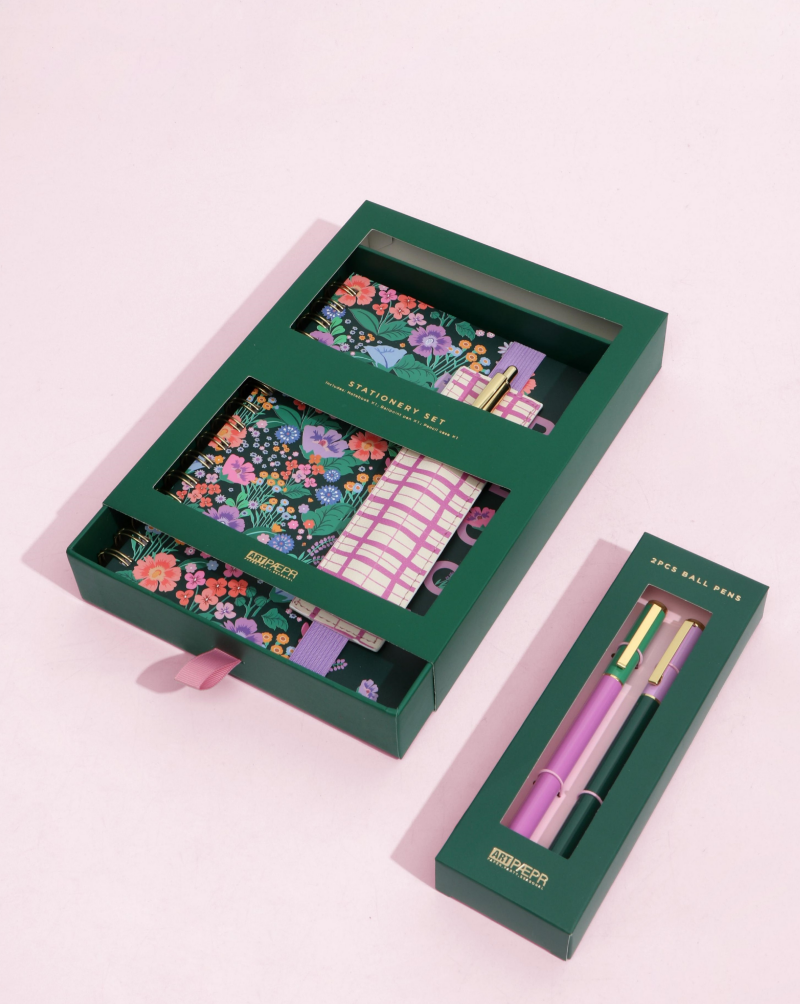
Source: Artcool Flora Lane-Gift & Stationery
Marketing Tips for Stationery Gift Sets
Marketing stationery gift sets requires more than highlighting product features. Buyers also consider the gifting occasion, design, perceived value, and presentation. Brands and retailers should build their marketing around these factors.
1. Build a Clear Product Theme
Give each collection a clear purpose and visual identity. A corporate gift set may focus on practical design and professional branding. A journaling set may use creative patterns and matching accessories.
Keep colors, artwork, and packaging consistent. A focused theme makes the collection easier to recognize and market.
2. Highlight the Value of the Complete Set
Show buyers what makes the set worth purchasing. Use product photos to present the full contents, packaging, and key details, such as notebook covers, paper quality, and pen finishes.
For stationery gift sets, presentation matters as much as product function. Unboxing photos and short videos can help customers understand the product’s appeal. Clear product descriptions should also list the contents, specifications, and customization options.
3. Offer Options for Different Budgets
Create different versions to reach a wider range of buyers. A basic set might include a notebook, pen, and simple box. A premium version could feature upgraded materials, additional accessories, and a rigid gift box.
For B2B buyers, provide clear specifications, customization options, minimum order quantities, and quotations. Sample kits can also help buyers assess materials and finishes before placing a bulk order.
4. Plan Around Key Selling Periods
Back-to-school, Christmas, graduation, and corporate gifting seasons offer opportunities for themed collections.
Start planning early. Confirm product designs, samples, packaging, and production schedules before the selling period. This gives retailers time to prepare listings and promotional campaigns.
For overseas markets, consider local holidays, language requirements, and applicable product regulations when developing each collection.
5. Use Suitable Marketing Channels
Different buyers need different types of information.
- B2B buyers: Use product catalogs, sourcing guides, LinkedIn, trade shows, and direct outreach. Focus on product specifications, customization, sampling, production capacity, and delivery schedules.
- Retail customers: Use e-commerce product pages, lifestyle photography, social media posts, and unboxing videos. Highlight the gift set’s design, contents, and intended use.
Keep branding consistent across products, packaging, catalogs, and online listings. This helps build recognition and supports future product launches.
6. Encourage Repeat Orders
Successful stationery gift sets can lead to repeat business. Corporate customers may reorder for employee gifts, client appreciation, and annual events. Retail brands can introduce new designs for holidays, graduation, or back-to-school seasons.
Use customer feedback and sales results to improve future collections. Once a set performs well, consider extending it with different price points, colors, or product combinations.
The key is to market a complete gifting experience, not just a box of stationery. Clear positioning, attractive presentation, and reliable product information help brands reach the right buyers and develop lasting customer relationships.

Conclusion
Developing custom stationery gift sets takes more than combining a notebook, pens, and a box. Brands and retailers need to consider product selection, customization, packaging, cost, and target markets. Each decision affects the final product and its market appeal.
Start with a clear market position, then choose products that fit the intended audience and gifting occasion. Match the level of customization and packaging to the target price. Plan sampling, production, and shipping early, especially for seasonal collections.
Working with an experienced OEM/ODM manufacturer can simplify product development, coordinate customization, and help maintain consistent quality.
For first-time projects, start with a focused product combination and a manageable order quantity. Test the design, pricing, and customer response before expanding the range.
A successful stationery gift set delivers more than individual products. Attractive packaging encourages the first purchase, product quality supports repeat orders, and a consistent brand experience builds customer loyalty.