Back-to-school shopping is a huge part of preparing for a successful year. The right tools make daily learning easier and much more fun. In fact, families are expected to spend about $922 on school shopping in 2026.
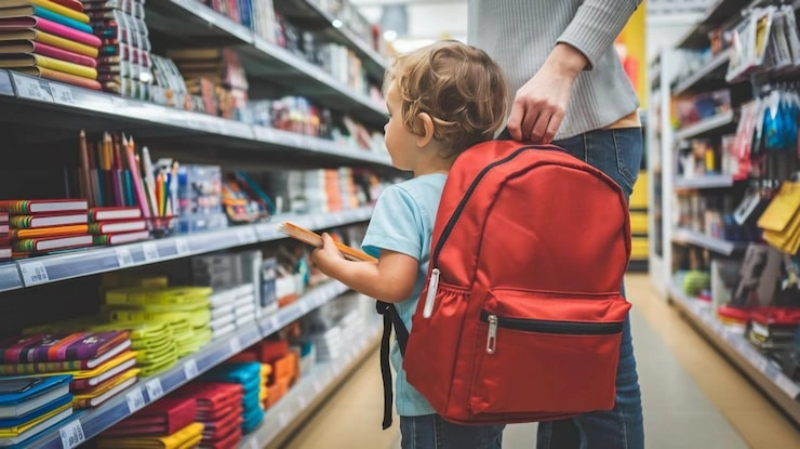
But walking down the supply aisle can feel overwhelming. The shelves are packed, and the lists are long. It is incredibly easy to buy things your student will never actually use. Buying too much wastes money. Yet, missing key items means making stressful, last-minute trips back to the store.
While core items like notebooks and pens are universal, other tools depend entirely on your student’s age. A preschooler needs creative, tactile supplies. A college student needs high-efficiency gear built for heavy lecture notes.
This guide cuts through the clutter. First, we will cover the universal essentials every student needs. Then, we will break down the exact supplies required by each grade level. Let’s skip the stress and set your student up for their best year yet.
Back-to-School Essentials List
Every teacher has a slightly different list. However, a few core essentials are universal. Buying these baseline items early helps students stay organized from day one and saves you from chaotic, last-minute shopping trips.
Here is the essential checklist for students of all ages:
1. Writing Essentials
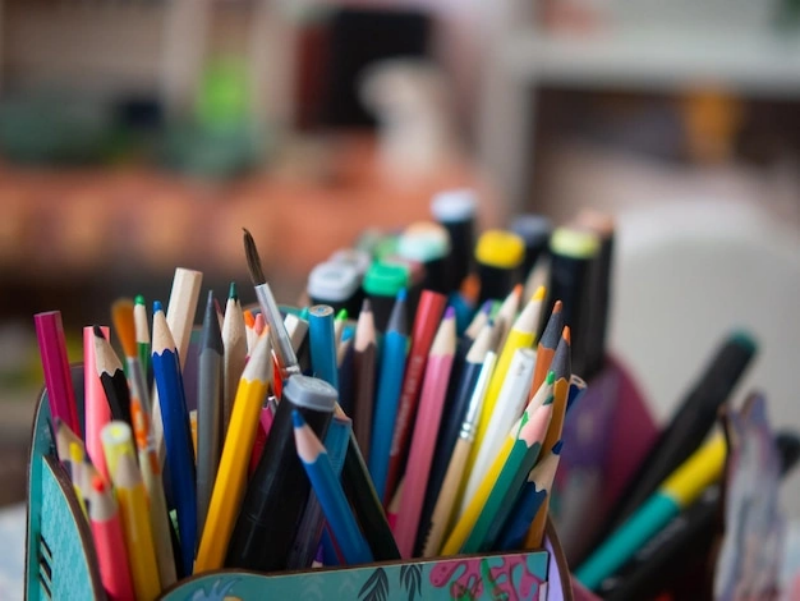
Writing tools are used every day for note-taking, homework, tests, and classroom activities.
Common essentials include:
- Pencils
- Mechanical pencils
- Ballpoint pens
- Gel pens
- Erasers
- Pencil sharpeners
- Highlighters
- Permanent markers
- Dry-erase markers
2. Paper Supplies
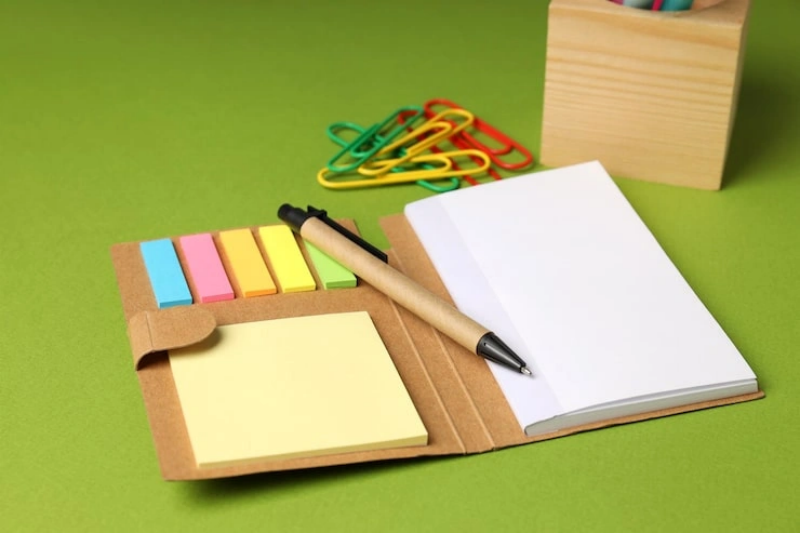
Paper products remain the foundation of classroom learning, whether students are taking notes, completing assignments, or organizing study materials.
Basic paper supplies include:
- Spiral notebooks
- Composition notebooks
- Loose-leaf paper
- Notepads
- Sticky notes
- Index cards
- Graph paper
3. Organization Supplies
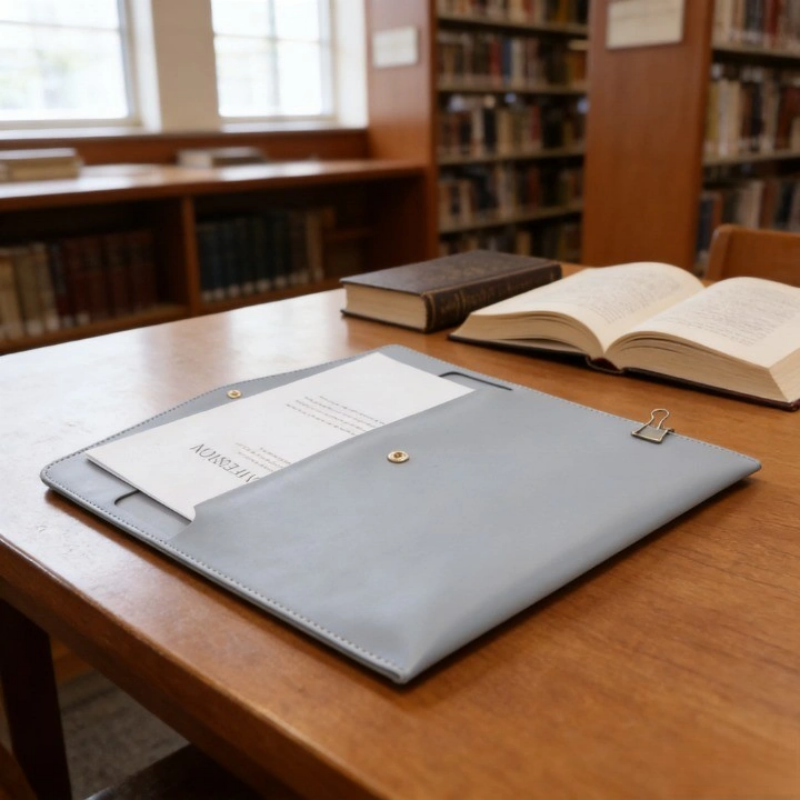
Keeping school materials organized helps students save time and stay focused throughout the semester.
Useful organization supplies include:
- Three-ring binders
- Binder dividers
- Expanding file folders
- Pencil cases
- Document folders
- Academic planners
- Labels and name stickers
- Bookmarks
- Pen holders
4. Art and Craft Supplies
Art supplies are especially important for younger students, but they are also useful for creative projects and presentations at higher grade levels.
Common items include:
- Colored pencils
- Crayons
- Washable markers
- Glue sticks
- Liquid glue
- Safety scissors
- Rulers
- Washi tapes
- Paint sets (when required)

5. Daily Essentials
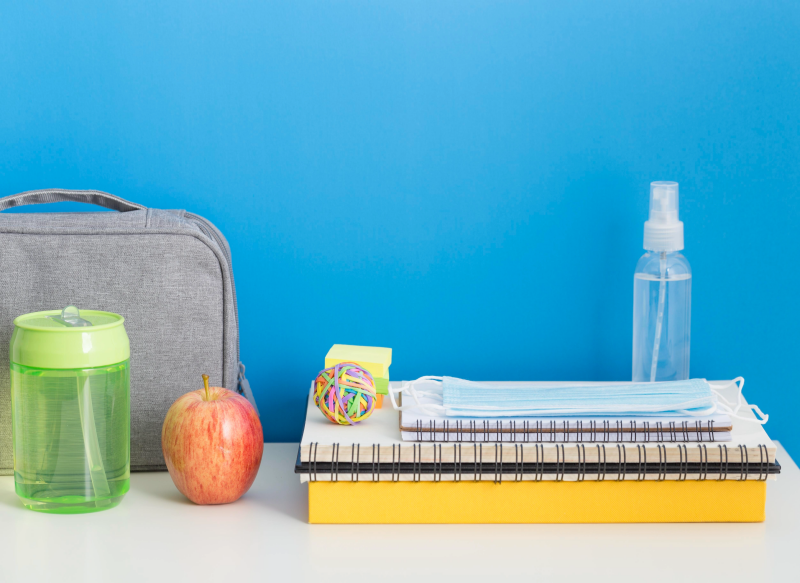
In addition to classroom supplies, a few everyday essentials can help students stay comfortable, organized, and prepared throughout the school day.
Common daily essentials include:
- Reusable water bottle
- Lunch box or lunch bag
- Backpack
- Tissues
- Wet wipes
- Umbrella or raincoat (if needed)
- Reusable shopping bag for activities
- Personal care items (such as lip balm or sunscreen, when appropriate)
Packing these everyday items can help students stay comfortable during long school days while encouraging healthy and sustainable habits.
6. Technology Essentials
Many schools now incorporate digital learning into their curriculum, making technology an important part of back-to-school preparation.
Depending on the grade level and school requirements, students may need:
- Laptop or Chromebook
- Tablet
- Wireless mouse
- Charging cable
- Portable charger
- Headset with microphone
- Calculator
Although this checklist covers the most common back-to-school essentials, not every student will need every item. School supply requirements often vary by grade level, subject, and classroom activities. In the next section, we’ll break down the recommended school supplies for each stage of education to help you create a more personalized shopping list.

School Supplies By Grade
Schools need to change as kids grow. Younger children need playful, hands-on tools to practice early writing and creativity. Older students need heavy-duty notebooks and high-efficiency gear to manage multiple subjects. Here is our grade-by-grade guide to help you buy exactly what they need.
(Note: Always double-check your school’s official list before making final purchases, as teacher requirements can vary.)
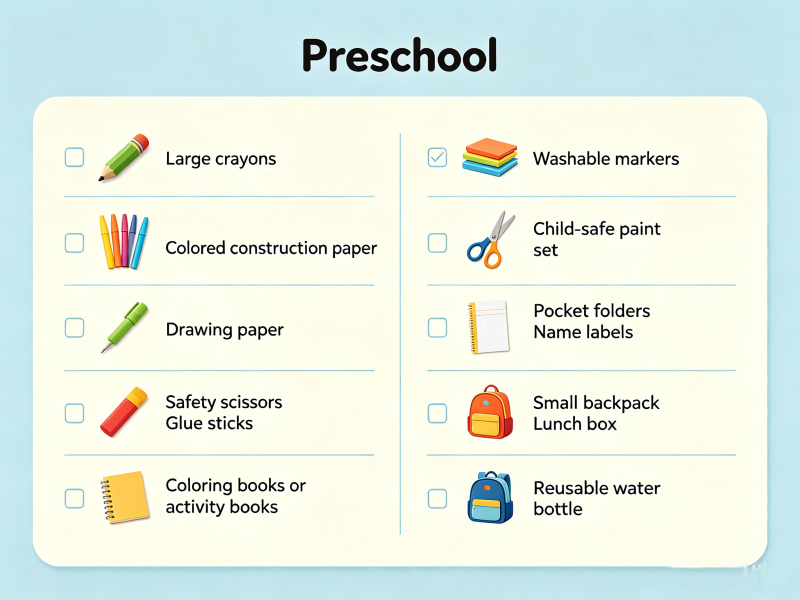
1. Preschool
Starting preschool or kindergarten is a massive milestone. At this stage, classrooms focus on playtime, creative discovery, and building early motor skills. Stationery should never feel rigid or boring. Instead, tools should feature bright colors, easy-to-grip shapes, and emotional comfort.
Typical preschool supplies include:
- Large crayons
- Washable markers
- Colored construction paper
- Drawing paper
- Safety scissors
- Glue sticks
- Child-safe paint set
- Coloring books or activity books
- Pocket folders
- Name labels
- Small backpack
- Lunch box
- Reusable water bottle
When shopping for this age group, always look for items labeled non-toxic, washable, and child-safe. Sturdy, easy-to-grip tools prevent frustration and help young learners build confidence as they draw, color, and craft.
Many schools will also ask parents to send in shared classroom supplies. Be prepared to add tissues, wet wipes, and hand sanitizer to your shopping cart.
2. Kindergarten
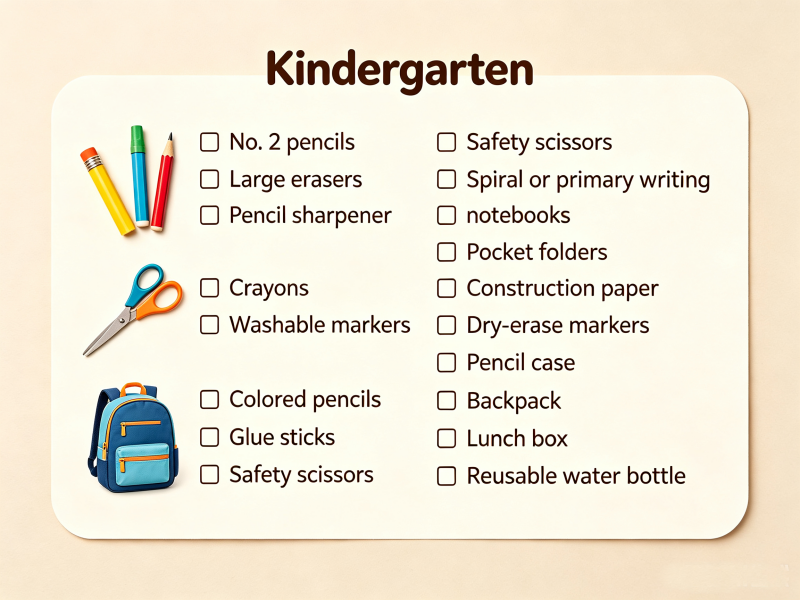
Kindergarten blends play with structured learning. Children begin practicing handwriting, early reading, and basic math. They also learn independent daily routines. Because they do more sitting and writing, their supply list includes more structural and organizational tools than preschool.
Common kindergarten supplies include:
- No. 2 pencils
- Large erasers
- Pencil sharpener
- Crayons
- Washable markers
- Colored pencils
- Glue sticks
- Safety scissors
- Spiral or primary writing notebooks
- Pocket folders
- Construction paper
- Dry-erase markers (if requested)
- Pencil case
- Backpack
- Lunch box
- Reusable water bottle
Look for durable, easy-to-use products that can handle daily wear and tear. Kindergarten classrooms are busy places. Be sure to label personal items like backpacks, lunch boxes, water bottles, and pencil cases. This simple step helps young children track their own gear and prevents items from getting lost in the classroom mix.
3. Elementary School (Grades 1–5)
As students progress through elementary school, they become more independent and begin using a wider variety of learning materials. Reading, writing, and classroom projects require students to stay organized and carry supplies for multiple subjects.
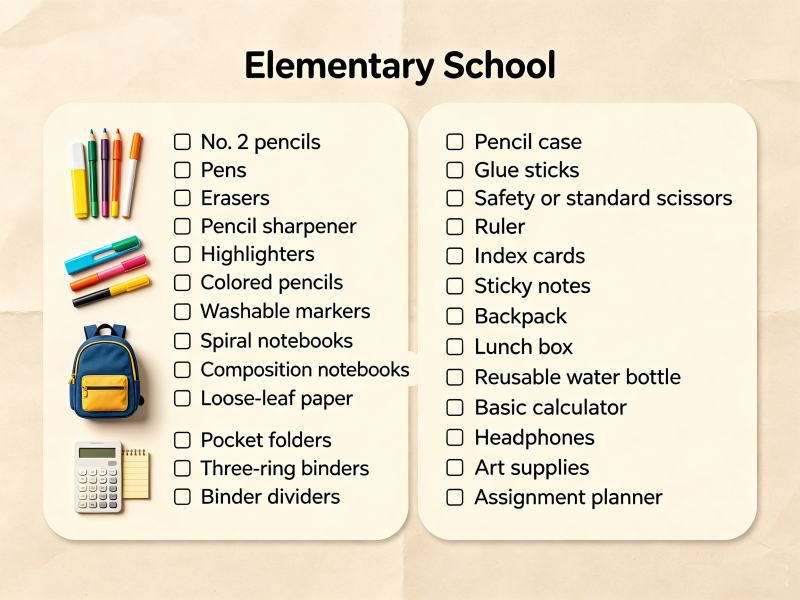
Typical school supplies for elementary students include:
- No. 2 pencils
- Pens (if permitted by the school)
- Erasers
- Pencil sharpener
- Highlighters
- Colored pencils
- Washable markers
- Spiral notebooks
- Composition notebooks
- Loose-leaf paper
- Pocket folders
- Three-ring binders
- Binder dividers
- Pencil case
- Glue sticks
- Safety or standard scissors
- Ruler
- Index cards
- Sticky notes
- Backpack
- Lunch box
- Reusable water bottle
Depending on the grade level, teachers may also request:
- Basic calculator
- Dry-erase markers
- Headphones for computer-based learning
- Art supplies for classroom projects
- Assignment planner or homework notebook
During these years, organization becomes a major focus. Using separate notebooks or folders for different subjects helps students keep track of their homework. It also builds strong, lifelong study habits. Keep in mind that supplies run out fast at this age. Don’t wait until pockets are empty. Check in every few months to replenish frequently used items.
4. Middle School (Grades 6–8)
Middle school changes the game. Students now juggle multiple subjects with different teachers. This means organization and time management matter more than ever. Beyond basic writing tools, your student will need specific organizational gear. They will also need the right technology to handle research, digital assignments, and classroom presentations.
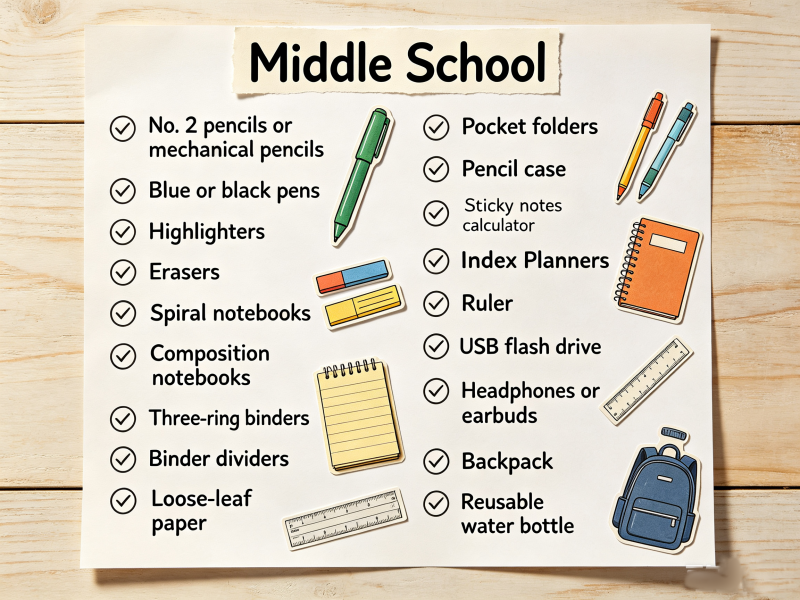
Typical school supplies for middle school students include:
- No. 2 pencils or mechanical pencils
- Blue or black pens
- Highlighters
- Erasers
- Spiral notebooks (one for each subject)
- Composition notebooks
- Loose-leaf paper
- Three-ring binders
- Binder dividers
- Pocket folders
- Pencil case
- Sticky notes
- Planners
- Index cards
- Scientific calculator (if required)
- Ruler
- USB flash drive
- Headphones or earbuds
- Backpack
- Reusable water bottle
Many middle schools also encourage or require students to use digital devices for learning. Depending on the school’s technology policy, students may also need:
- Laptop or Chromebook
- Tablet
- Charging cable
- Wireless mouse
As coursework gets tougher, a daily planner is a total lifesaver. It helps students track homework, quizzes, project deadlines, and after-school activities. Building these strong organizational habits now is crucial. It prepares your student for the heavy academic workload waiting for them in high school.
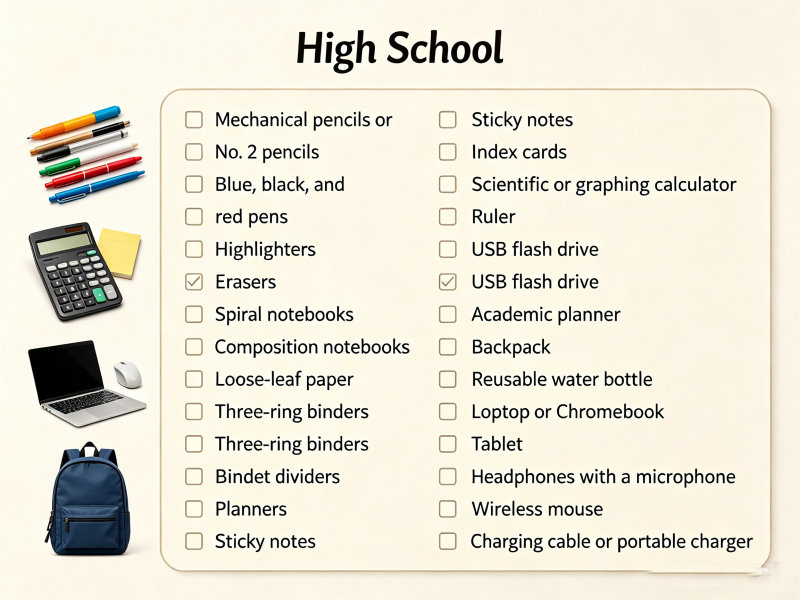
5. High School (Grades 9–12)
High school students often manage a heavier academic workload, multiple subjects, and long-term projects. Many courses require specialized supplies, while digital learning plays an increasingly important role in research, note-taking, and assignment submission. Staying organized is essential for keeping up with classes and preparing for exams.
Typical school supplies for high school students include:
- Mechanical pencils or No. 2 pencils
- Blue, black, and red pens
- Highlighters
- Erasers
- Spiral notebooks
- Composition notebooks
- Loose-leaf paper
- Three-ring binders
- Binder dividers
- Pocket folders
- Planners
- Sticky notes
- Index cards
- Scientific or graphing calculator (depending on math courses)
- Ruler
- USB flash drive
- Academic planner
- Backpack
- Reusable water bottle
Many high school students also benefit from technology for both classroom and home learning. Depending on school requirements, they may need:
- Laptop or Chromebook
- Tablet
- Headphones with a microphone
- Wireless mouse
- Charging cable or portable charger
With advanced courses and college prep on the horizon, staying organized is the best way to beat stress. Use separate notebooks or binders for each subject, and use a planner to track deadlines. Keep a small backup stash of pens and paper so students never run out during an exam. These simple habits keep students productive all year long.
6. College
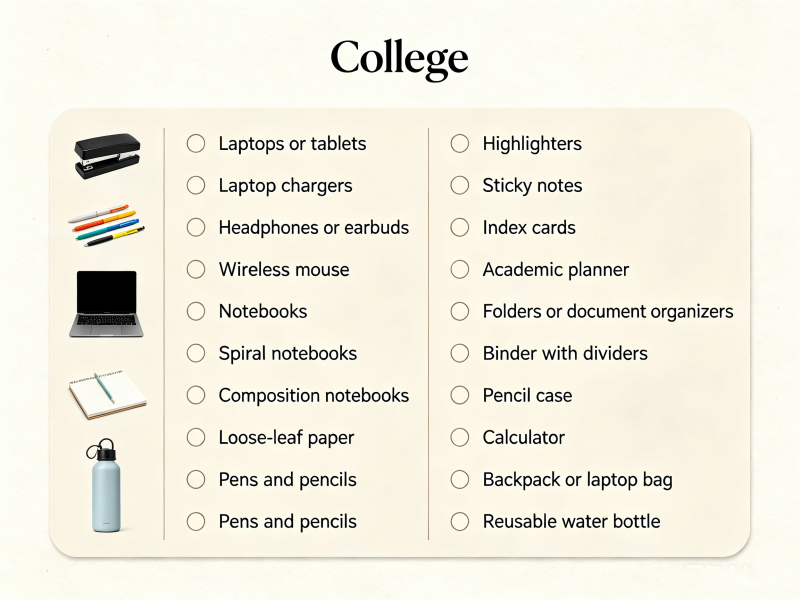
College gives students the freedom to choose their own tools. Professors rarely hand out detailed supply lists. Instead, students select gear based on their major, their personal study habits, and how they prefer to learn. The key is finding high-efficiency tools that support independent studying and heavy workloads.
Common college essentials include:
- Laptops or tablets
- Laptop chargers
- Headphones or earbuds
- Wireless mouse
- Notebooks
- Spiral notebooks
- Composition notebooks
- Loose-leaf paper
- Pens and pencils
- Highlighters
- Sticky notes
- Index cards
- Academic planner
- Folders or document organizers
- Binder with dividers
- Pencil case
- Calculator (for specific courses)
- Backpack or laptop bag
- Reusable water bottle
Students in different fields may also need specialized supplies. For example:
- Art and design students may need sketchbooks, drawing tools, cutting tools, and presentation materials.
- Science and engineering students may require lab notebooks, graph paper, calculators, and technical tools.
- Business students may benefit from planners, professional notebooks, and presentation supplies.
College students constantly move between classrooms, libraries, and cafes. Because you are always on the go, lightweight and durable gear is a must. Stick to portable tools like slim notebooks, sticky notes, and sleek folder organizers. These items keep your papers neat, boost your productivity, and make it easy to manage tight semester deadlines.
Frequently Asked Questions About Back-to-School Supplies
Q1: What baseline supplies does every single student need?
Most students need a core set of essentials. This includes pencils, smooth pens, erasers, a few notebooks, folders, and a sturdy backpack. Younger kids will need more arts and crafts supplies. Older students will need more advanced organizational tools and tech accessories.
Q2: When is the absolute best time to start shopping?
The sweet spot is mid-July to early August. Nearly 67% of families start buying items by early July. However, if you shop in June, stores haven’t put out their best bundle deals yet. If you wait until late August, the shelves will be stripped bare. Shopping 4 to 6 weeks before school starts gives you the best choices and the biggest discounts.
Q3: My child’s school hasn’t sent out a supply list yet. What should I buy right now?
Stick strictly to the universal essentials. Every student needs a high-capacity pencil case, basic pens, a reliable notepad, and a few standard notebooks. Lock in these baseline items early. Wait on specialized gear, like specific calculators or art binders, until the teacher hands out the syllabus on day one.
Q4: Should I buy a spiral, hardcover, or softcover notebook?
It depends entirely on how your student works:
- Spiral: Best for limited desk space, as it folds completely flat.
- Hardcover: Best for students who travel and need a rigid surface to write on their lap or on the bus.
- Softcover: Best for cutting down backpack weight if they already carry a heavy laptop.
Q5: Are curated stationery sets actually worth it?
Yes. Stationery sets save both time and money. They bundle your daily essentials—like pens, pads, and highlighters—at a much lower price than buying items piece by piece. Plus, they offer a clean, matching look that can make students excited to stay organized.
Q6: How can I save money on my total bill?
First, shop your home and reuse items that are still in good shape. Next, buy frequently used items like pencils and glue sticks in bulk. Finally, stick to a strict checklist before you head to the store to avoid impulse buys.
Q7: Should I stock up on extra supplies?
Yes, but only for the basics. Buying extra pencils, notebooks, and erasers is smart because students run through them fast. However, avoid buying large amounts of grade-specific items until your classroom teacher confirms exactly what they need.
Conclusion
Preparing for a new school year does not have to be stressful. By securing your baseline essentials early and layering on the specific tools your student needs for their grade, you turn a chaotic chore into a smart strategy.
The right tools do more than just fill a backpack. A smooth pen reduces hand fatigue during long writing sessions. An organized planner clears mental clutter. A bright, fun pencil case brings a splash of joy to a busy morning. High-quality stationery builds daily focus and learning confidence.
Do not wait for the chaotic, last-minute rush to clear out the store shelves. Use this guide as your master checklist, lock in your gear early, and give your student the exact tools they need to succeed. Happy shopping, and here is to your most organized, creative, and successful school year yet!