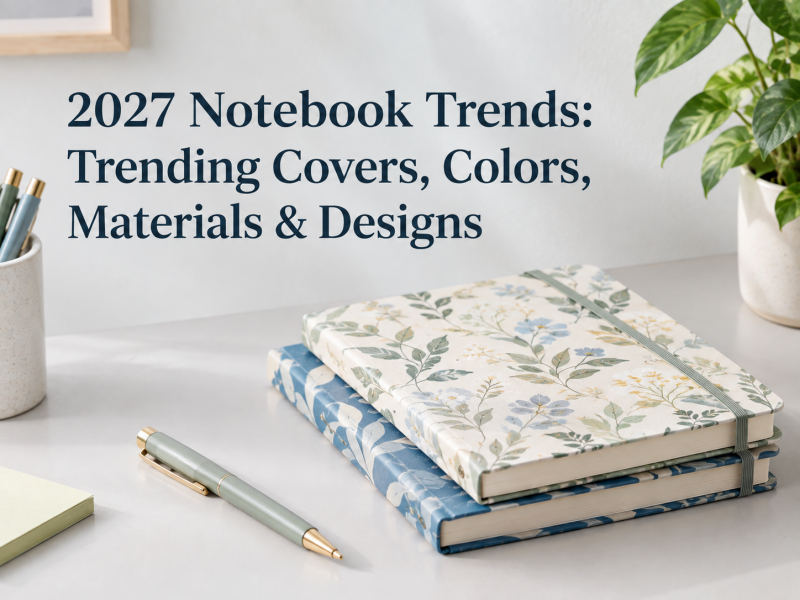
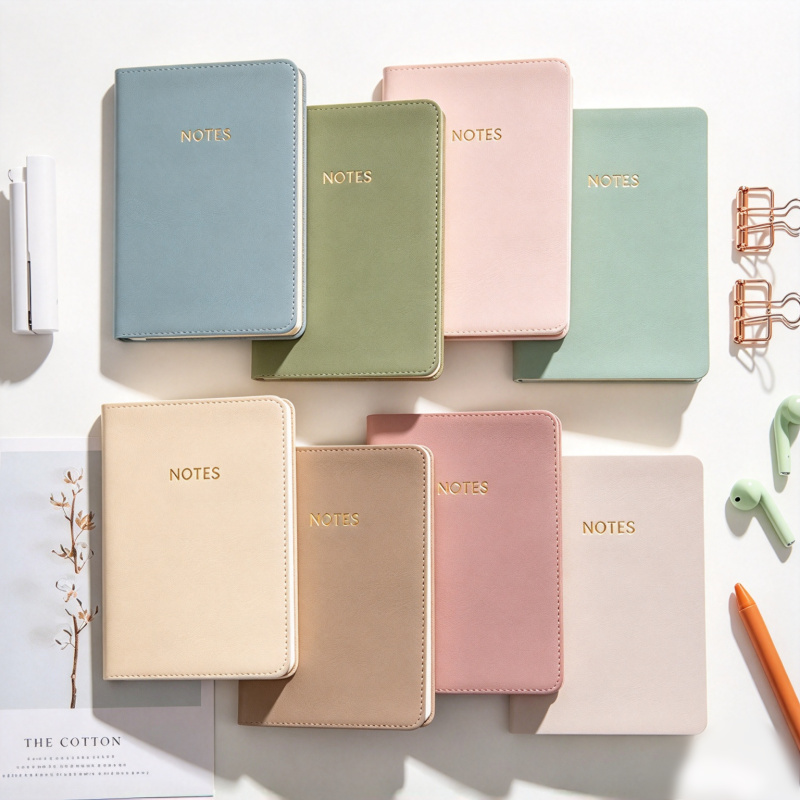
PU notebooks use polyurethane (PU) or PU-based synthetic leather for their covers. The material can create a leather-like appearance and feel while offering a more consistent surface than genuine leather.
The global PU notebook market is projected to reach $1.8 billion by 2027, growing at 5.3% CAGR.
So, what is a PU notebook, and why is PU used for notebook covers? The answer involves more than the cover material itself. PU can be produced in different colors, textures, and finishes, while the notebook can use different paper types, binding methods, and functional features.
This guide explains what PU notebooks are made of, how they compare with genuine leather and PVC leather, their key features and benefits, available styles, customization options, and common applications.
What Is a PU Notebook?
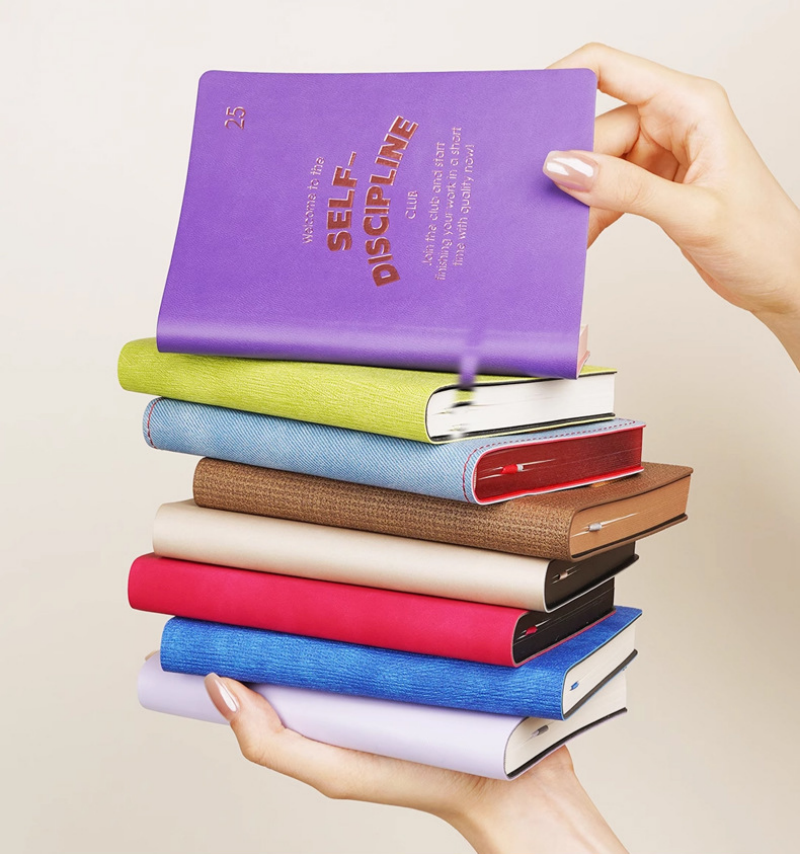
A PU notebook is a notebook with a cover made from polyurethane (PU) or PU-based synthetic leather. PU is a type of polymer that can be processed to create a surface similar to genuine leather.
PU leather is usually made by applying a polyurethane layer to a backing material, such as fabric or nonwoven material. The surface can then be finished with different textures or grain patterns. This gives the cover a leather-like look and feel.
The notebook itself can have different constructions. A PU cover may be combined with rigid binder board for a hardcover notebook or a flexible backing for a softcover design. PU covers are also available in different colors, textures, and finishes. They can be embossed, debossed, printed, or finished with foil, depending on the material and production process.
The key difference is the cover material. A PU notebook uses synthetic polyurethane material instead of genuine leather, giving buyers more options for cover design and customization.
PU vs. Genuine Leather vs. PVC Leather
PU, genuine leather, and PVC are all used for notebook covers. However, they differ in material, feel, appearance, cost, and customization options.
PU vs. Genuine Leather
PU is a synthetic material with a more consistent surface. It can be produced in many colors and textures. It is also easier to match across large production runs.
Genuine leather is made from animal hide and has natural variations in grain, color, and texture. No two pieces may look the same.
For notebook covers, PU is often used when buyers want a leather-like appearance with more consistent production and a lower material cost. Genuine leather is more suitable when natural material and a distinctive leather feel are key product requirements.
PU vs. PVC Leather
Both PU and PVC are synthetic leather materials. PU generally provides a softer and more flexible feel, while PVC tends to have a firmer, more plastic-like surface. PVC can be a practical choice when a lower-cost synthetic cover is required.
The actual performance of PU and PVC depends on factors such as material grade, thickness, backing, and surface treatment. Buyers should check samples and material specifications before placing a bulk order.
| Feature | PU Leather | Genuine Leather | PVC Leather |
|---|---|---|---|
| Material | Polyurethane-based synthetic material | Animal hide | PVC-based synthetic material |
| Appearance | Consistent, leather-like surface | Natural grain and texture | Uniform, leather-like surface |
| Feel | Soft and flexible | Natural and supple | Usually firmer and more plastic-like |
| Color Options | Wide range | Depends on the leather type | Wide range |
| Texture Options | Wide range | Natural variations | Wide range |
| Cost | Moderate | Generally higher | Generally lower |
| Customization | Flexible | Depends on leather type | Flexible |
Key Features of PU Notebooks
PU notebooks have several distinctive features, mainly related to their cover material, surface finish, and construction.
1. Leather-Like Look and Feel
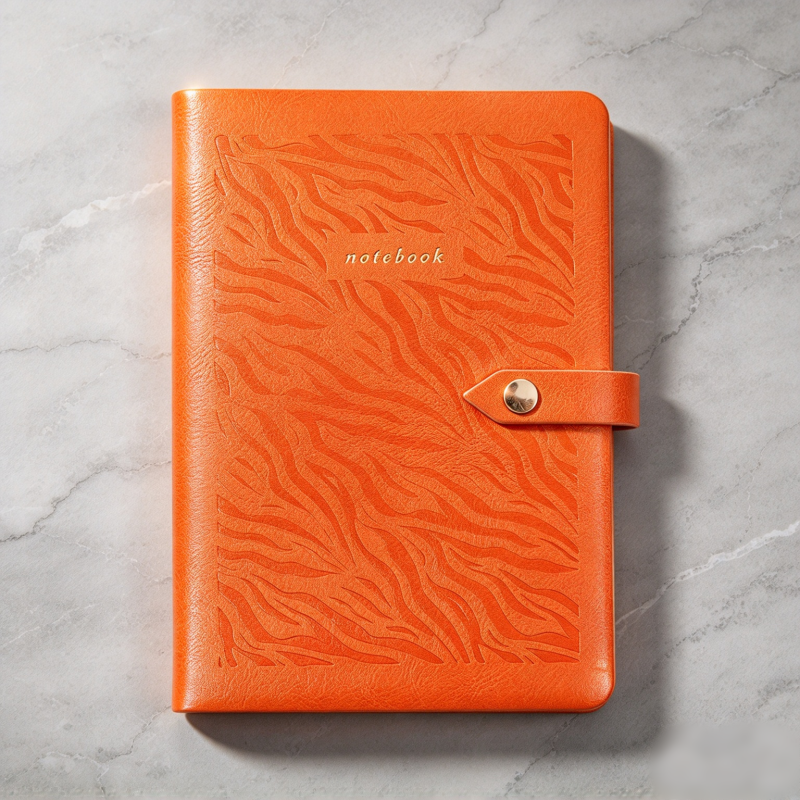
PU covers can imitate the appearance and texture of genuine leather. They are generally soft and flexible, with finishes ranging from smooth surfaces to pebbled and litchi grain patterns.
2. Wide Range of Colors and Textures
PU is available in many colors, patterns, and surface finishes. Its manufactured surface also allows for more consistent color and texture across production batches.
3. Resistance to Everyday Wear
Many PU covers offer some resistance to moisture, stains, and abrasion. They can usually be cleaned with a soft, damp cloth. However, their performance depends on the material grade, thickness, and surface treatment.
4. Versatile Cover Construction
PU can be combined with rigid or flexible backing materials to create hardcover and softcover notebooks. It can also accommodate elastic closures, magnetic flaps, pen loops, pockets, and ribbon bookmarks.
5. Compatibility with Decorative Finishes
PU covers can support printing, foil stamping, embossing, and debossing, depending on the material. Some heat-reactive PU materials also produce a contrasting color effect when pressed with a heated logo die.
Source: Artcool PU Hardcover Notebook
Benefits of PU Notebooks
The features of PU covers can provide several practical benefits for notebook buyers and brands. These benefits are especially relevant when appearance, budget, consistency, and everyday use are important.
1. Balance of Cost and Appearance
PU can provide a leather-like look and feel at a lower material cost than many genuine leather options. This allows buyers to create notebooks with a more premium appearance while keeping the product within a controlled price range.
2. Consistent Quality for Bulk Orders
PU is a manufactured material, so its color, texture, and thickness can be controlled more consistently than natural leather. This makes it useful for large orders that require a uniform appearance across the entire collection.
3. Lower Maintenance
Many PU surfaces can be wiped clean with a soft cloth and do not require the same type of conditioning as genuine leather. This makes PU notebooks practical for regular use and frequent handling.
4. Flexible Product Positioning
PU notebooks can be developed in different sizes, cover styles, paper formats, and price levels. Buyers can adjust these elements to create products for everyday stationery, business use, gifting, or retail collections.
5. Suitable for Long-Term Branding
A PU cover provides a stable surface for logos, patterns, and other decorative details. When the material and finishing method are properly matched, the notebook can maintain a consistent branded appearance throughout its intended use.
PU Notebook Customization Options
PU notebooks can be customized in many ways. Buyers can adjust the cover, inner pages, accessories, and packaging to match a brand, budget, or product concept.
| Customization Area | Common Options | Typical Purpose |
|---|---|---|
| Cover | Color, texture, logo, foil, embossing, printing | Brand identity |
| Inner Pages | Layout, paper, page count, printed content | Specific use |
| Binding & Accessories | Binding, closures, pen loops, pockets, bookmarks | Function and convenience |
| Packaging | Sleeves, boxes, gift sets, cartons | Retail and gifting |
1. Cover Customization
The cover is usually the main focus of PU notebook customization. Buyers can choose different colors, textures, and finishes to create a specific look.
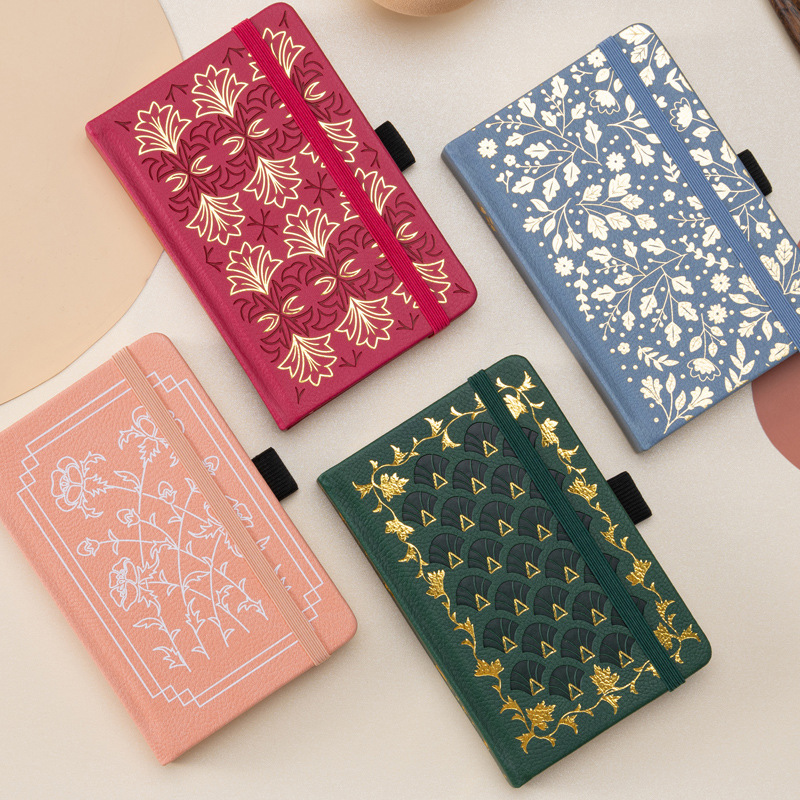
- Foil stamping: Adds gold, silver, rose gold, or other foil effects to logos and text.
- Embossing and debossing: Creates raised or recessed logos and patterns on the PU surface.
- Screen printing: Suitable for colorful logos, graphics, and simple patterns.
- UV printing: Creates detailed and colorful designs on suitable PU surfaces.
- Metal badges: Adds a custom metal logo or decorative plate to the cover.
The suitable method depends on the PU material, artwork, and required effect. A sample is recommended before mass production.
2. Inner Page Customization
The inner pages can be designed for different uses. Buyers can customize the paper type, layout, page count, and printed content.
- Lined, blank, grid, or dot-grid pages
- Planner and calendar layouts
- Meeting and project pages
- Different paper weights and colors
- Custom page counts
- Printed logos, brand information, or other content
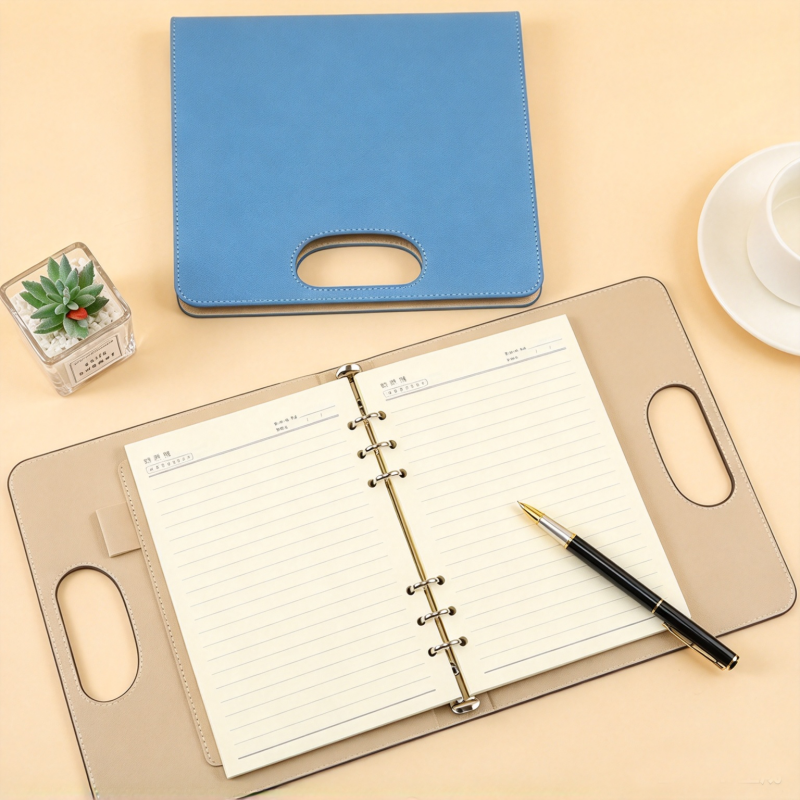
A5 and B5 are common choices for business and professional notebooks, while smaller formats such as A6 are useful for portable products.
3. Binding and Accessory Customization
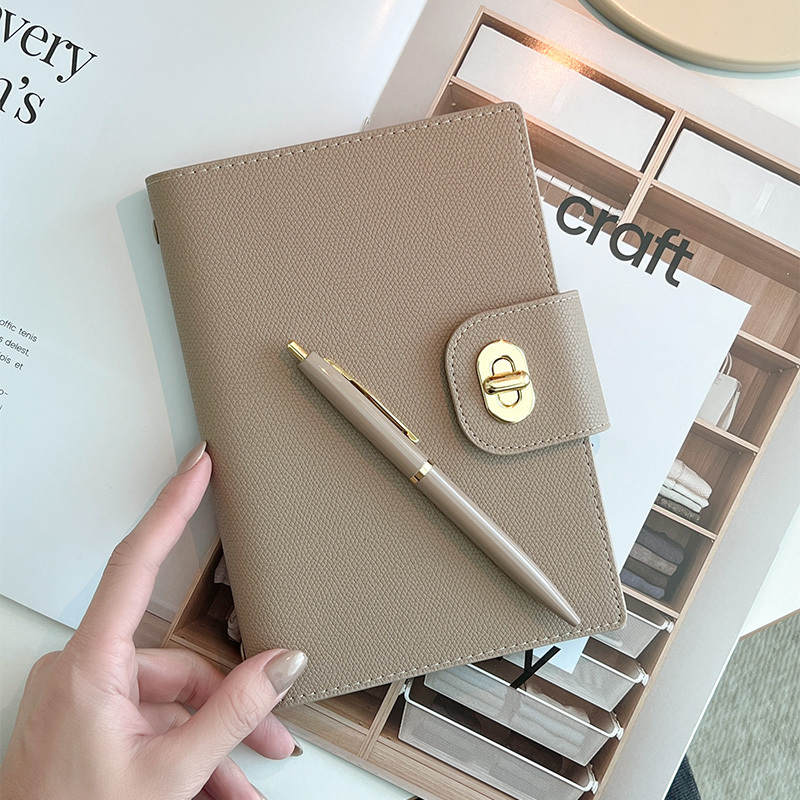
Binding and accessories can be adjusted to improve the notebook’s function and appearance.
- Hardcover or softcover construction
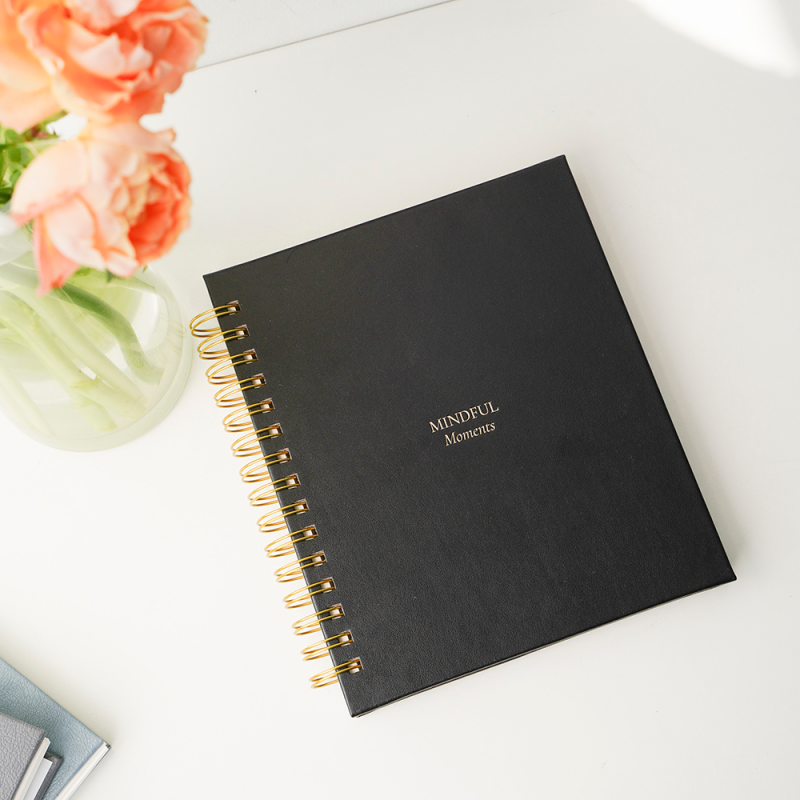
- Spiral, Wire-O, sewn, or ring binding
- Elastic closures
- Pen loops
- Ribbon bookmarks
- Inner pockets
- Card slots
- Magnetic closures
Accessories can also be matched to the cover color or overall brand design. For example, a branded notebook may use a matching elastic band, ribbon bookmark, and pen loop.
4. Custom Packaging
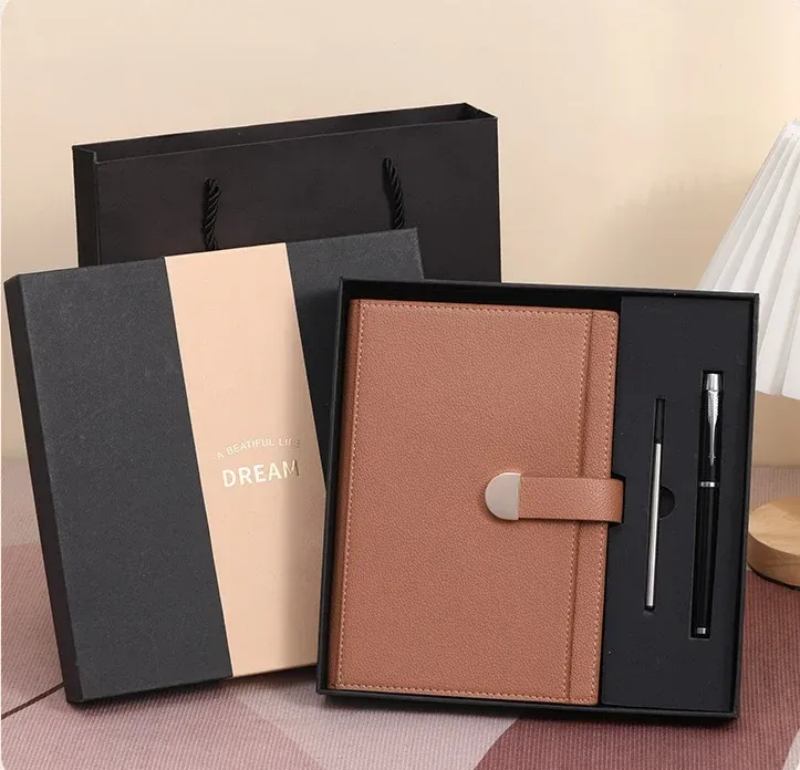
Packaging can be designed to match the notebook and its target market.
- Paper sleeves and belly bands
- Individual paper boxes
- Gift boxes
- Fabric or drawstring bags
- Custom inner inserts
- Printed shipping cartons
For corporate gifts or premium stationery, a notebook can also be packaged with pens or other accessories as a complete gift set.
Where Are PU Notebooks Used?
PU notebooks are used across business, retail, education, and personal settings. Their leather-like appearance, practical construction, and flexible design make them suitable for both branded products and everyday stationery.
1. Corporate Gifts and Business Use
PU notebooks are widely used for corporate gifts, client gifts, and daily office work. A hardcover design can provide a more professional look, while features such as pen loops, pockets, and elastic closures add practical value.
Companies may use them for client meetings, employee gifts, business events, or partner programs. Custom logos and packaging can also make the notebook part of a wider corporate gift set.
2. Conferences and Events
PU notebooks are also suitable for conferences, seminars, training sessions, and product events. They provide attendees with a practical item for taking notes during the event.
The cover can carry the event logo or theme, while the inner pages can include schedules, speaker information, or note pages. This makes the notebook both a writing tool and part of the event materials.
3. Employee Welcome Kits
PU notebooks can be included in employee welcome kits and internal training materials. They are useful for meetings, project notes, and daily office work.
Simple designs are often enough for this purpose. A company logo, matching color, elastic closure, and pen loop can create a practical branded notebook without adding unnecessary features.
4. Retail and Stationery Products
PU notebooks can also be developed as retail stationery. Brands and retailers can create different collections by changing the cover color, texture, format, binding, and page layout.
They are suitable for journals, planners, notebooks, and other lifestyle stationery. More distinctive finishes and cover designs can help create a stronger visual identity for retail products.
5. Education and Personal Use
PU notebooks can be used for training programs, workshops, study, journaling, and personal planning. Different page layouts can support note-taking, planning, or creative writing.
Smaller formats are useful for everyday carrying, while larger notebooks provide more writing space. Softcover designs are also convenient for users who need a lightweight notebook.

Conclusion
A PU notebook uses polyurethane-based material to create a leather-like cover. It offers a consistent appearance, a comfortable feel, and flexible design options. Compared with genuine leather, PU can provide a similar look at a more accessible cost.
For brands and buyers, PU notebooks also offer flexibility in product development. Cover colors and finishes, inner pages, binding, accessories, and packaging can be adjusted to meet different product requirements.
PU notebooks are suitable for corporate gifts and business use. Their balance of appearance, cost, consistency, and customization makes them a practical choice for many stationery projects.
For bulk orders, buyers should consider the intended use, target price, cover material, and required features. Reviewing material samples and production details before mass production can also help ensure that the final notebooks meet the required quality and design standards.