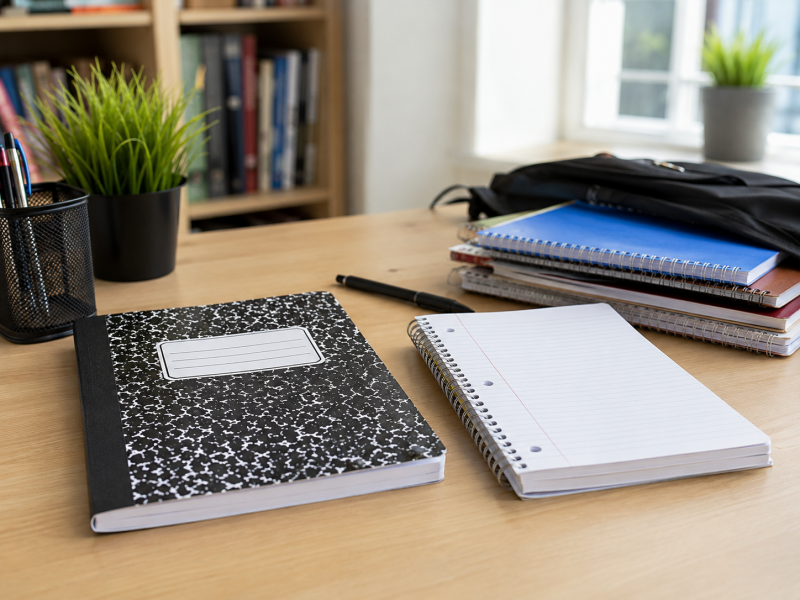
Choosing the right notebook makes a huge difference in your daily writing. Two options dominate the shelves: the classic composition books and the ubiquitous spiral notebooks.
At first glance, they seem similar. However, their bindings tell a different story. Composition books use sewn bindings that lock pages securely in place. Spiral notebooks use flexible wire coils that allow 360-degree folding and clean tear-outs.
These structural choices affect durability, writing comfort, and long-term storage. Which notebook is right for you? It depends entirely on your habits. This guide breaks down composition books vs spiral notebooks to help you pick the perfect match for your school or work style.
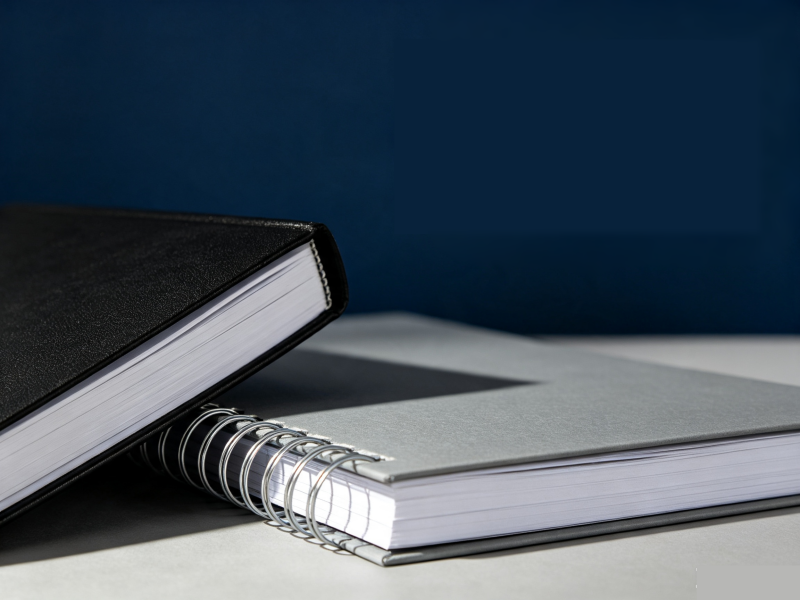
Composition Books vs Spiral Notebooks Quick Comparison Chart
| Feature | Composition Book | Spiral Notebook |
|---|---|---|
| Binding | Sewn | Wire Spiral |
| Durability | Excellent | Good |
| Pages | Cannot remove easily | Easy tear-out |
| Fold Back | No | Yes |
| Writing Comfort | Flat | Foldable |
| Security | Better | Lower |
| Portability | Good | Excellent |
| Cost | Lower | Similar |
What Is a Composition Book
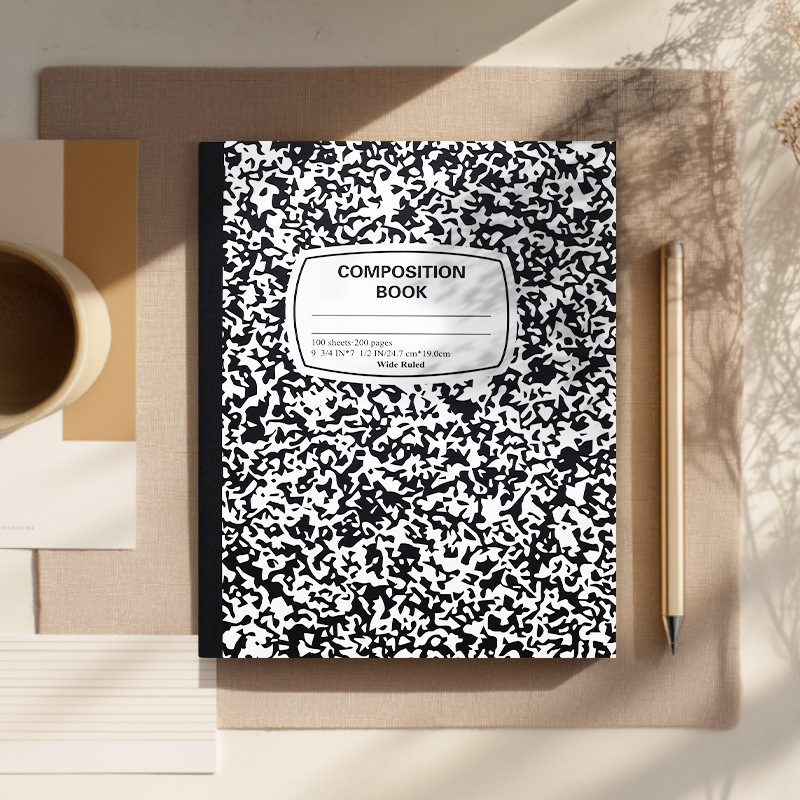
Originating in 19th-century Europe as an affordable alternative to leather journals, the Composition Book is a timeless American classic. It remains defined by its signature black-and-white marbled cover and heavy-duty sewn spine.
Key Features & Design
- Smyth Sewn Binding: Pages are folded into signatures, thread-stitched together, and sealed with heavy spine tape. No loose glue or fragile metal coils are used.
- Rigid Cardboard Cover: The solid outer shell creates a firm surface, making it easy to write anywhere—even on your lap.
- Classic Marble Aesthetic: The iconic black-and-white pattern was originally created to disguise ink stains and everyday wear.
Pros: Why Composition Books Endure
- Unmatched Durability: With no wire coils to bend or snap, it slides smoothly into bags without snagging clothing or electronics.
- Tamper-Evident Security: Pages cannot be removed without leaving obvious gaps. This makes it mandatory for lab research, legal logs, and formal school exams.
- Sleek, Stackable Storage: The completely flat spine allows books to stack neatly on shelves or inside archive boxes.
Cons: Where They Fall Short
- No 360-Degree Folding: The rigid spine requires the notebook to lie open across two pages, taking up more desk space.
- Inflexible Page Removal: Tearing out a page damages the sewn binding, eventually loosening neighboring sheets.
Primary Uses
- School & STEM Classes: Ideal for lab logs, journaling, and multi-term subject notes where pages must stay intact. Many U.S. schools include composition books in their school supply lists.
- Archival & Personal Use: Perfect for diaries, meeting records, and legal documentation meant for long-term storage.
What Is a Spiral Notebook
Where composition books prioritize permanence, the Spiral Notebook focuses entirely on flexibility and fast-paced note-taking. Bound by a continuous plastic or metal wire coil threaded through punched holes, it is the ultimate utility tool for students and professionals.
Key Features & Design
- Coil Binding Systems: Available in Twin-Wire / Wire-O, Plastic Coils, or Single Metal Spirals.
- 360-Degree Foldability: The cover folds completely behind the back page. This cuts the footprint in half for effortless writing on tiny lecture desks, transit, or your lap.
- Micro-Perforated Pages: Features a pre-cut perforated edge near the coil. Users can tear out clean sheets without leaving jagged paper confetti or loosening the spine.
- Multi-Subject Structure: Available in 1-subject, 3-subject, or 5-subject formats. Built-in plastic dividers include expandable pockets for storing loose handouts and syllabus sheets.
- Diverse Page Layouts: Offsets traditional line styles by offering College Ruled, Wide Ruled, Graph Grid, Dot Grid (bullet journaling), and Blank (sketching) pages.
Pros: Why Spiral Binding Excels
- Maximum Mobility: Folds flat in any writing space, standing or seated.
- Easy Page Removal: Hand in assignments or share meeting memos without ruining the book.
- All-in-One Organization: Multi-subject dividers organize multiple courses or projects inside a single binder.
Cons: Where They Fall Short
- Coil Snagging & Bending: Metal wires can snag on backpack fabric or bend out of shape, causing pages to catch.
- Center Coil Discomfort: Writing near the central coil is uncomfortable. Resting your palm against the raised wire limits wrist movement and makes writing on inner margins awkward.
- Bulky Profile: Coils take up extra space and stack unevenly on shelves.
Primary Uses
- Classroom & Office Notes: Perfect for quick lecture notes, daily task lists, and team brainstorming sessions.
- Planners & Creative Drafts: Ideal for bullet journals, sketching, field surveys, and tracking multi-subject studies.
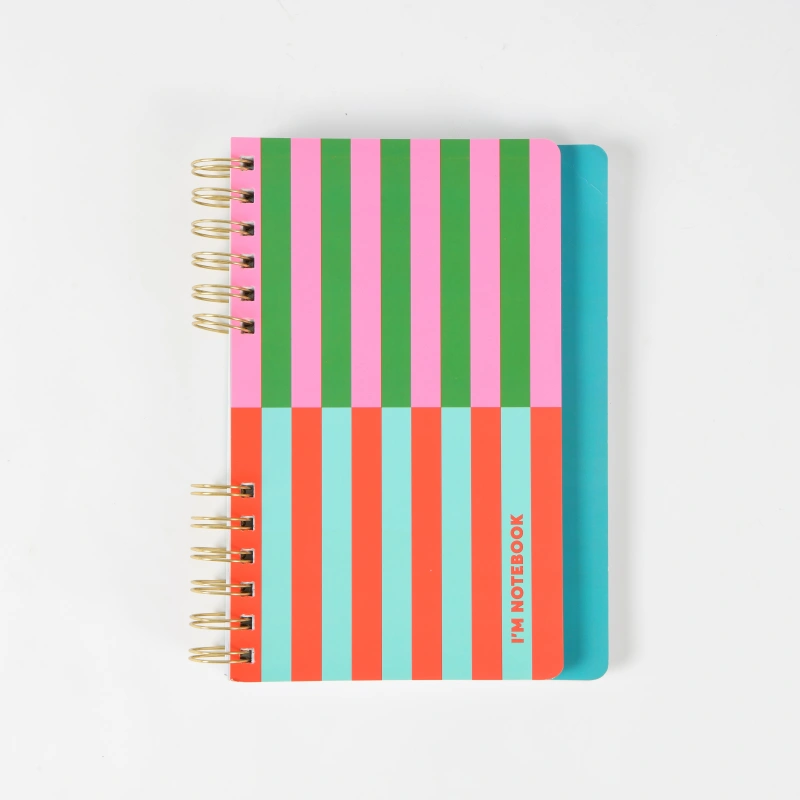
Source: Artcool ISO GLOW series
Composition Books vs Spiral Notebooks: A Detailed Comparison
1. Composition Books vs Spiral Notebooks: Durability
- Composition Books: Thread-sewn pages and a thick, rigid cover make them nearly indestructible. With no protruding parts, they slide into crammed bags without snagging clothing or scratching screens.
- Spiral Notebooks: External wire coils easily bend, flatten, or crush under heavy books. Over time, bent coils cause pages to catch, tear loose, or scratch bag linings.
2. Composition Books vs Spiral Notebooks: Page Removal
- Spiral Notebooks: Micro-perforated pages allow quick, clean tear-outs. Users can hand in assignments or share meeting notes without leaving messy paper confetti.
- Composition Books: Built as a closed-binding system. Ripping out a sheet damages the central stitching, which eventually loosens neighboring pages inside the book.
3. Composition Books vs Spiral Notebooks: Writing Comfort
- Composition Books: The smooth tape spine creates a completely flat surface. Without a central wire obstacle, users can rest their wrists comfortably while writing near the inner margins.
- Spiral Notebooks: The raised central coil restricts wrist motion. Pressing your palm against the hard wire creates discomfort when writing near the inner edges.
4. Composition Books vs Spiral Notebooks: Space Efficiency
- Spiral Notebooks: The flexible coil allows 360-degree folding, cutting the notebook’s footprint in half. This is ideal for tiny lecture hall desks, fieldwork, or writing on your lap.
- Composition Books: The rigid spine requires the notebook to lie open across two full pages, taking up twice as much physical desk space.
5. Composition Books vs Spiral Notebooks: Storage & Stacking
- Composition Books: Flat, slim spines allow uniform, lopsided-free stacking on bookshelves, inside laptop sleeves, and in archive storage boxes.
- Spiral Notebooks: Coils add extra thickness to one side, making stacks feel uneven. The exposed metal loops can also catch on backpack zippers and loose mesh.
6. Composition Books vs Spiral Notebooks: Page Capacity & Dividers
- Spiral Notebooks: Larger coil diameters allow heavy-duty 3-subject and 5-subject organizers. Built-in cardstock or plastic dividers feature expandable pockets for holding loose handouts.
- Composition Books: Fixed by traditional sewing limits, usually capped at 80 to 100 sheets for a single subject without built-in storage pockets.
7. Composition Books vs Spiral Notebooks: Paper & Formatting Variety
- Spiral Notebooks: Offer extensive layout choices, including College Ruled, Wide Ruled, Graph Grid, Dot Grid, and Blank pages, alongside flexible poly cover designs.
- Composition Books: Mostly standardized into standard Wide Ruled, College Ruled, or basic Graph Grid layouts with classic marbled cardboard covers.
8. Composition Books vs Spiral Notebooks: Cost & Overall Value
- Composition Books: Feature a simple, mass-produced construction that offers low, predictable pricing. They deliver high long-term value for permanent records.
- Spiral Notebooks: Span a wider price range. While basic single-subject units are cheap, premium versions with heavy coils, poly covers, and pocket dividers cost significantly more.
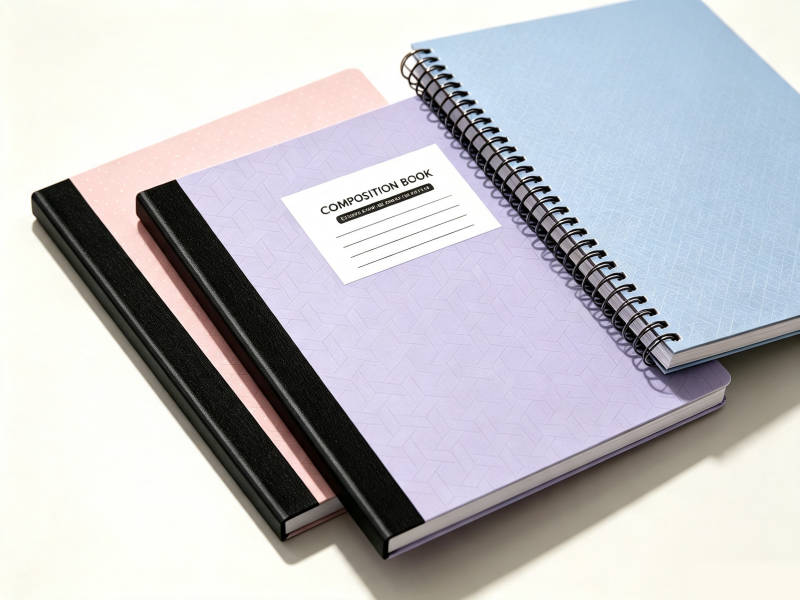
How to Choose the Perfect Notebook
Selecting the right notebook comes down to your physical workspace, note-handling habits, and long-term storage needs.
1. Consider Your Writing Environment
Choose a spiral notebook if you often write in flexible or limited spaces.
- Take notes in classrooms, lecture halls, or on small desks
- Need to write while standing or moving around
- Prefer a notebook that folds completely backward to save space
Choose a composition book if you usually write in a stable workspace.
- Write at a desk, office table, or laboratory workstation
- Need more space for diagrams, charts, or two-page notes
- Prefer a clean writing surface without a center spiral wire
2. Think About How You Use and Store Your Notes
Choose a spiral notebook if you need flexibility and easy page management.
- Need to remove pages for assignments, reports, or sharing
- Want to separate different subjects with dividers or sections
- Use your notebook for drafts, to-do lists, and everyday notes
Choose a composition book if your notes need to stay together for a long time.
- Personal journals and diaries
- Research notes and project records
- Laboratory notes or important documentation
- Any information that should remain organized in chronological order
3. Match Your Notebook with Your Carrying and Writing Habits
Choose a spiral notebook if you value convenience and quick access.
- Prefer lightweight notebooks for daily use
- Need different paper styles, such as ruled, graph, or dotted pages
- Want a notebook that opens easily in any situation
Choose a composition book if you need extra durability.
- Carry your notebook in a crowded backpack
- Want a sturdy cover that protects pages
- Prefer a compact design without a wire edge that can bend or get caught
Create Custom Notebooks for Your Brand with Artcool
Whether you need durable composition-style books or flexible spiral notebooks, custom solutions help your products stand out. At Artcool, we provide custom notebook manufacturing for retailers, wholesalers, schools, and brands worldwide. We turn your design ideas into high-quality stationery products tailored to your market.
Customization Options
We offer complete OEM and private-label customization, including:
- Binding Styles: Premium hardcovers, lightweight softcovers, spiral coils, and custom binding solutions.
- Cover Finishes: Custom logo printing, embossing, foil stamping, unique textures, and seasonal artwork.
- Inner Page Layouts: Ruled, graph grid, dot grid, blank, or custom-printed planner layouts.
Why Choose Artcool?
- Trend-Setting In-House Design: Over 20 in-house designers continuously launch new styles to capture market trends.
- Dual-Nation Manufacturing: Facilities in China and Vietnam ensure flexible supply chain routing and cost efficiency.
- Massive Production Capacity: Our 12,000 m² Vietnam factory produces up to 20 full containers per month, generating $10 million in annual sales.
- Trusted Global Partners: We serve major retail giants, including Walmart, Kohl’s, Dollar General, Dollar Tree, ASDA, and Kmart.
- End-to-End Quality Control: Complete support from material selection and sample design to mass production and strict quality checks.
Developing a back-to-school line, launching a branded retail collection, or sourcing corporate gifts? Artcool delivers stationery that balances functionality, quality, and brand value. Contact Artcool today to discuss your custom notebook project!