Blog

Explore the World of Stationery

Wire-O Binding vs Spiral Binding: Differences, Pros & Cons

Table of Contents

When designing custom notebooks, planners, or other stationery products, choosing the right binding method is an important decision. Wire-o binding vs spiral binding are two common options. Both make pages easy to turn and can provide good lay-flat performance, but their structures are different.

Wire-O binding uses pre-formed double-loop metal wire, while Spiral binding uses a continuous coil made from plastic or metal. The different structures can affect page turning, flexibility, appearance, durability, and cost.

These differences also make each method suitable for different products and market positions. This guide compares wire-o binding vs spiral binding, including their features, common uses, advantages, and key factors to consider.

notebooks

What Is Wire-O Binding

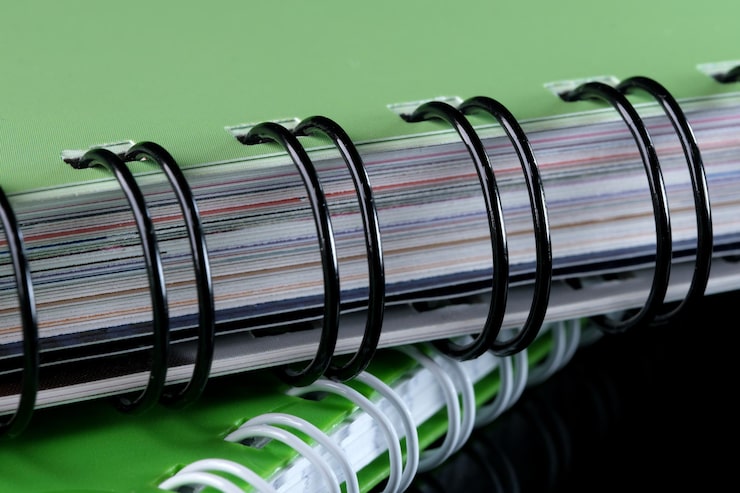
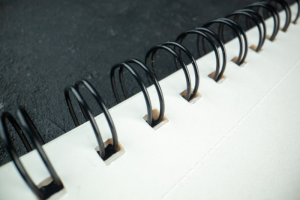
Wire-O binding, also known as twin-loop or double-loop binding, uses pre-formed metal wire loops to hold pages and covers together.

During production, holes are punched along the edge of the pages and covers. The wire is then inserted through the holes and closed to form a series of double loops. Square holes are commonly used, although the exact hole pattern can vary by product and equipment.

The finished binding has a clean and even appearance. It also keeps pages well aligned and allows the document to open flat, making it suitable for writing, planning, and note-taking.

What Is Spiral Binding

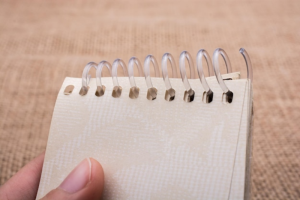
Spiral binding, also known as coil binding, uses a continuous plastic or metal coil to hold pages and covers together.

During production, round holes are punched along the edge of the pages and covers. The coil is then threaded through the holes from one end to the other. The ends are usually cut and secured to prevent the coil from coming loose during use.

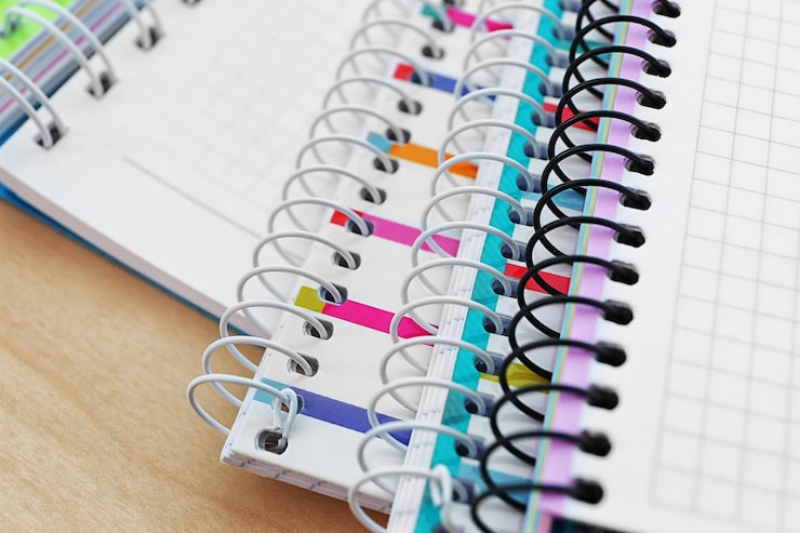
The continuous coil gives the binding a flexible structure. Pages can turn easily, and the notebook can often fold back for convenient writing. Coils are also available in different sizes and colors, giving buyers more options for product design.

Quick Look: Wire-O Binding vs Spiral Binding

Both binding methods offer good lay-flat performance, but they differ in flexibility, appearance, and durability.

FeatureWire-O BindingSpiral Binding
Binding structureDouble-loop metal wireContinuous plastic or metal coil
FlexibilityGood lay-flat performanceMore flexible and can fold back easily
DurabilityStrong, but the metal wire can bend under heavy pressureFlexible and less likely to permanently deform
AppearanceClean and professionalPractical and casual
Best suited forPlanners, premium notebooks, calendarsNotebooks, workbooks, journals

Pros and Cons of Wire-O Binding and Spiral Binding

Wire-O Binding

Pros

    • Provides a clean and polished binding structure.

    • Opens flat for easy writing and viewing.

    • Keeps pages securely held in place during frequent use.

    • Metal wire offers good strength and shape stability.

    • Allows easy page turning without the resistance of a continuous coil.

Cons

    • Metal loops can bend or deform under heavy pressure.

    • Usually costs more than Spiral binding.

    • 360° folding may be limited depending on the product design.
      wire-o binding notebook

Spiral Binding

Pros

    • Flexible coils can bend and spring back after compression.

    • Allows the pages to fold back for 360° use.

    • Lightweight plastic coils are easy to handle.

    • Available in a wide range of colors and sizes.

    • Often more cost-effective for large-volume production.

Cons

    • The continuous coil can cause a slight shift between facing pages.

    • Plastic coils may crack or deform under excessive force.

    • Coil size needs to match the page count and cover thickness.
Common Uses of Wire-o Binding and Spiral Binding

Wire-O Binding

    • Corporate reports

    • Business presentations

    • Planners and calendars

    • Portfolios

    • Diaries and journals

    • Product catalogs

    • Premium notebooks

Spiral Binding

    • Cookbooks and recipe books

    • Children’s activity books

    • School notebooks and workbooks

    • Product manuals and user guides

    • Training books and workbooks

    • Technical reference books

    • Sketchbooks

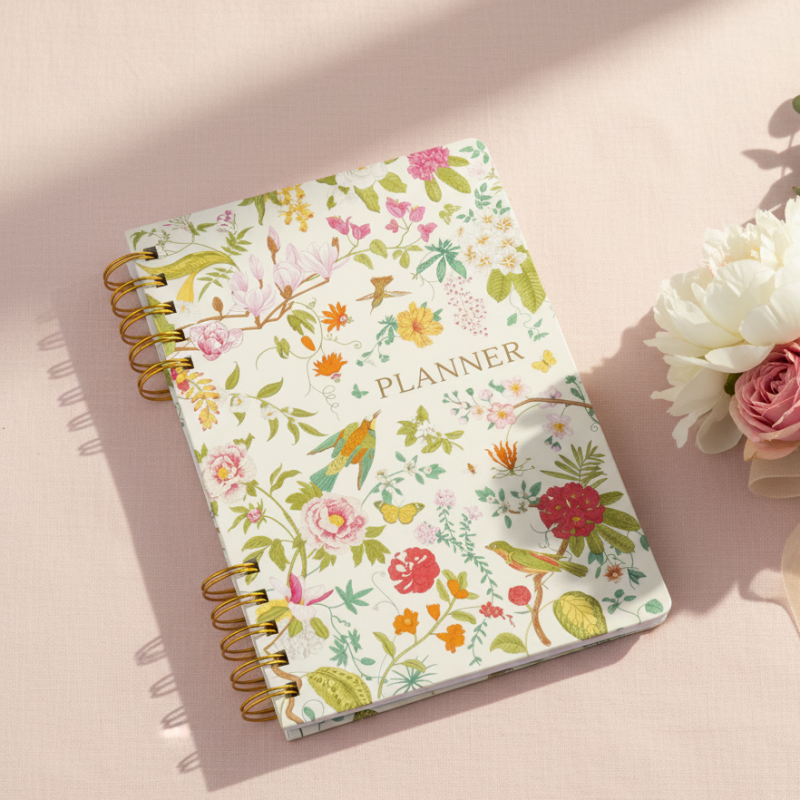
flower planner

Additional Considerations

  • Budget: Spiral binding is usually more cost-effective, especially for large-volume orders.
  • Usage: For products that need frequent handling or 360° use, Spiral binding offers greater flexibility.
  • Durability: Wire-O provides strong metal loops, while plastic Spiral coils can bend and recover from pressure.
  • Presentation: Wire-O offers a clean and polished look for products where appearance matters.
  • Page Layout: Wire-O keeps facing pages more evenly aligned when opened flat. This can be useful for calendars, portfolios, and full-page designs.
  • Design: Spiral coils offer more color options, while Wire-O provides different metal finishes.
  • Production: Buyers should confirm page count, cover thickness, binding size, MOQ, and lead time with the manufacturer before production.

colorful notebooks

Conclusion

Wire-o binding and spiral binding are not simply different binding methods. They create different experiences in how a notebook or other stationery product opens, turns, and feels in use.

The binding also becomes part of the product’s visual identity. Metal loops can add a structured, polished detail, while a continuous coil creates a more flexible construction.

Ultimately, good binding should do more than hold pages together. It should become part of what makes the finished product functional, durable, and well-designed.

Artcool is a trusted leader in the stationery industry—here to help!

Create Your Custom Stationery Today
Scroll to Top

Send Your Inquiry Today